
History of...(text analysis - intermediate)
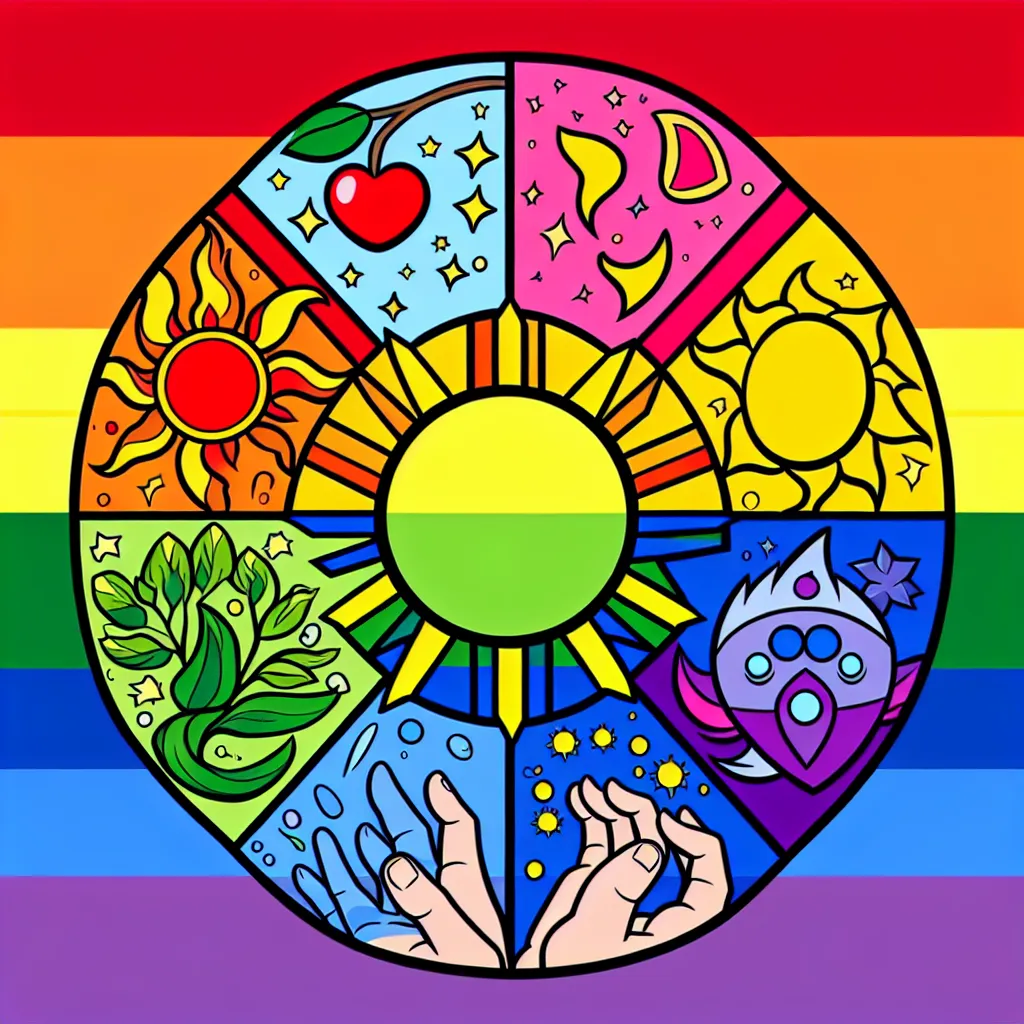
The Pride Flag, also known as the Rainbow Flag, is a symbol of the LGBTQ+ community and its social movements. The flag was created in 1978 by artist Gilbert Baker, as well as other activists, and has since become a widely recognized symbol for LGBTQ+ pride and diversity.
The original flag had eight colors, each with its own meaning: hot pink for sex, red for life, orange for healing, yellow for sunlight, green for nature, turquoise for magic/art, blue for serenity, and violet for spirit. However, due to the limited availability of hot pink fabric, the flag was later modified to seven stripes, and then to the current six stripes: red, orange, yellow, green, blue, and violet.
The flag was first flown at the San Francisco Gay Freedom Day Parade on June 25, 1978. After the assassination of gay San Francisco City Supervisor Harvey Milk later that year, demand for the flag increased, and it began to be produced with the six-stripe design we see today.
Since its creation, the Pride Flag has inspired many variations to represent different groups within the LGBTQ+ community, such as the transgender flag and the bisexual flag. The rainbow colors have also been used in adaptations of national and regional flags to show LGBTQ+ pride.
The Pride Flag has been used in protests and events worldwide, and has even been added to the collection of the Museum of Modern Art in Manhattan. In 2015, the White House was illuminated in rainbow colors to celebrate the legalization of same-sex marriage in all 50 U.S. states.
The Pride Flag continues to be a symbol of LGBTQ+ pride and a call for equality, diversity, and acceptance. It serves as a reminder of the progress made and the work still to be done for LGBTQ+ rights.