Voices of Independence Movements

Definition of Independence and Independence Movements
Independence refers to the condition of a nation, country, or state being free from external control or influence, exercising self-governance. Independence movements are organized efforts by groups or nations to achieve political freedom and autonomy.
Example: Prior to 1982, Canada's efforts to patriate its Constitution and introduce the Charter of Rights and Freedoms exemplify an independence movement aimed at achieving full sovereignty from the United Kingdom.
Pre-Independence Situation in Canada 1982
Introduction
Prior to the patriation of the Canadian Constitution in 1982, Canada experienced significant political, social, and economic dynamics which shaped its journey towards greater autonomy from the United Kingdom.
Political Situation
Canada was a dominion within the British Commonwealth, with its Constitution still under British control. The country operated under the British North America Act, 1867, which required approval from the British Parliament for constitutional amendments. Prime Minister Pierre Elliott Trudeau spearheaded efforts to patriate the Constitution, aiming to introduce the Charter of Rights and Freedoms to protect civil liberties. The federal and provincial governments were engaged in negotiations over constitutional reforms, highlighting the complexities of federalism and regional interests.
Social Situation
Canada in 1982 was characterized by a multicultural society, with increasing recognition of diverse cultural identities. Indigenous populations sought greater recognition of their rights and autonomy. The Official Languages Act of 1969 fostered bilingualism, reflecting the linguistic duality of English and French, with Quebec asserting its distinct cultural identity and political aspirations. Social movements advocating for gender equality and minority rights were gaining momentum.
Economic Situation
Canada's economy was heavily reliant on natural resources, particularly in sectors like energy, forestry, and mining. The country maintained strong trade relationships with the United States and other nations, influenced by global economic trends. Economic disparities existed between provinces, with Western provinces experiencing resource-driven growth, while Eastern regions faced industrial decline. Inflation and unemployment were notable challenges during this period.
Conclusion
The pre-independence situation in Canada was marked by efforts to achieve constitutional autonomy, social identity recognition, and economic stability. These factors collectively influenced the transition towards a fully sovereign nation in 1982.
Voices of independence
Prime Minister Pierre Elliott Trudeau
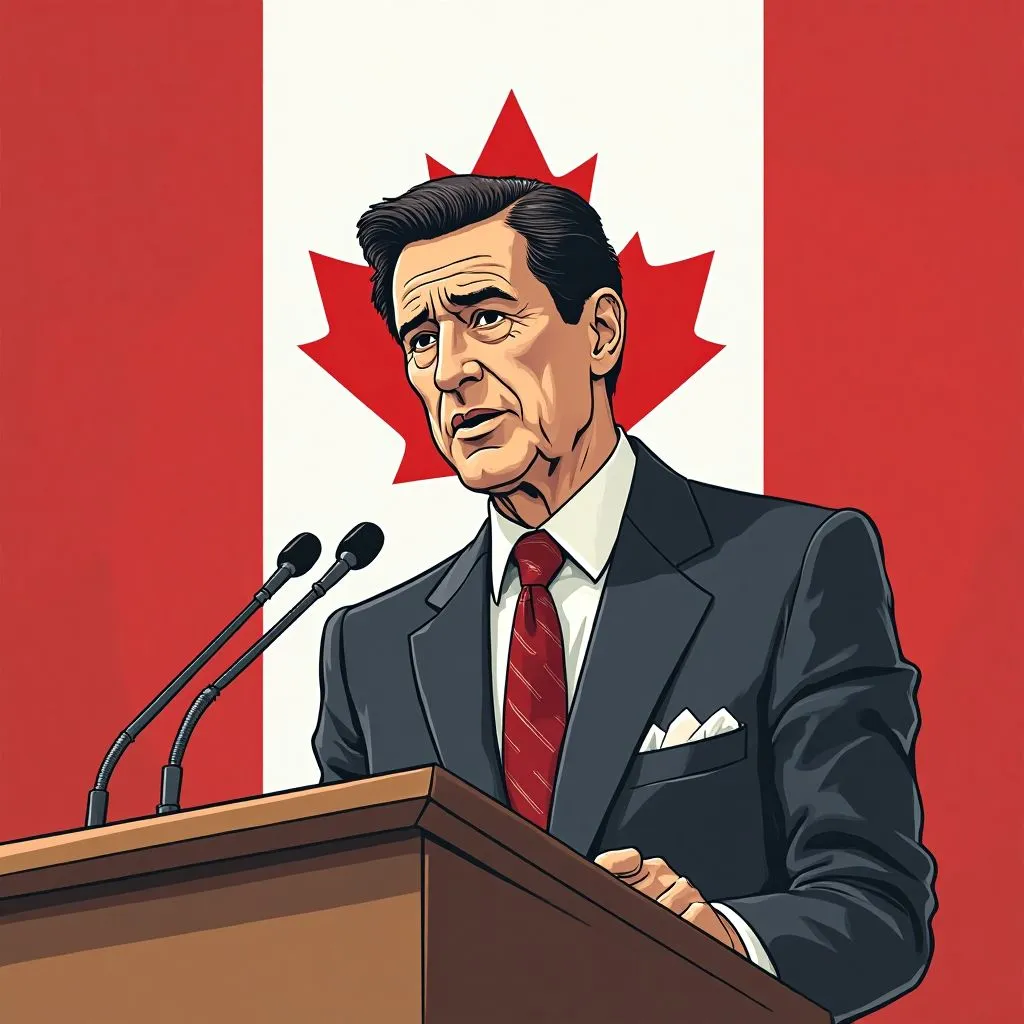
René Lévesque, Premier of Quebec