
Exchange rates

Introduction
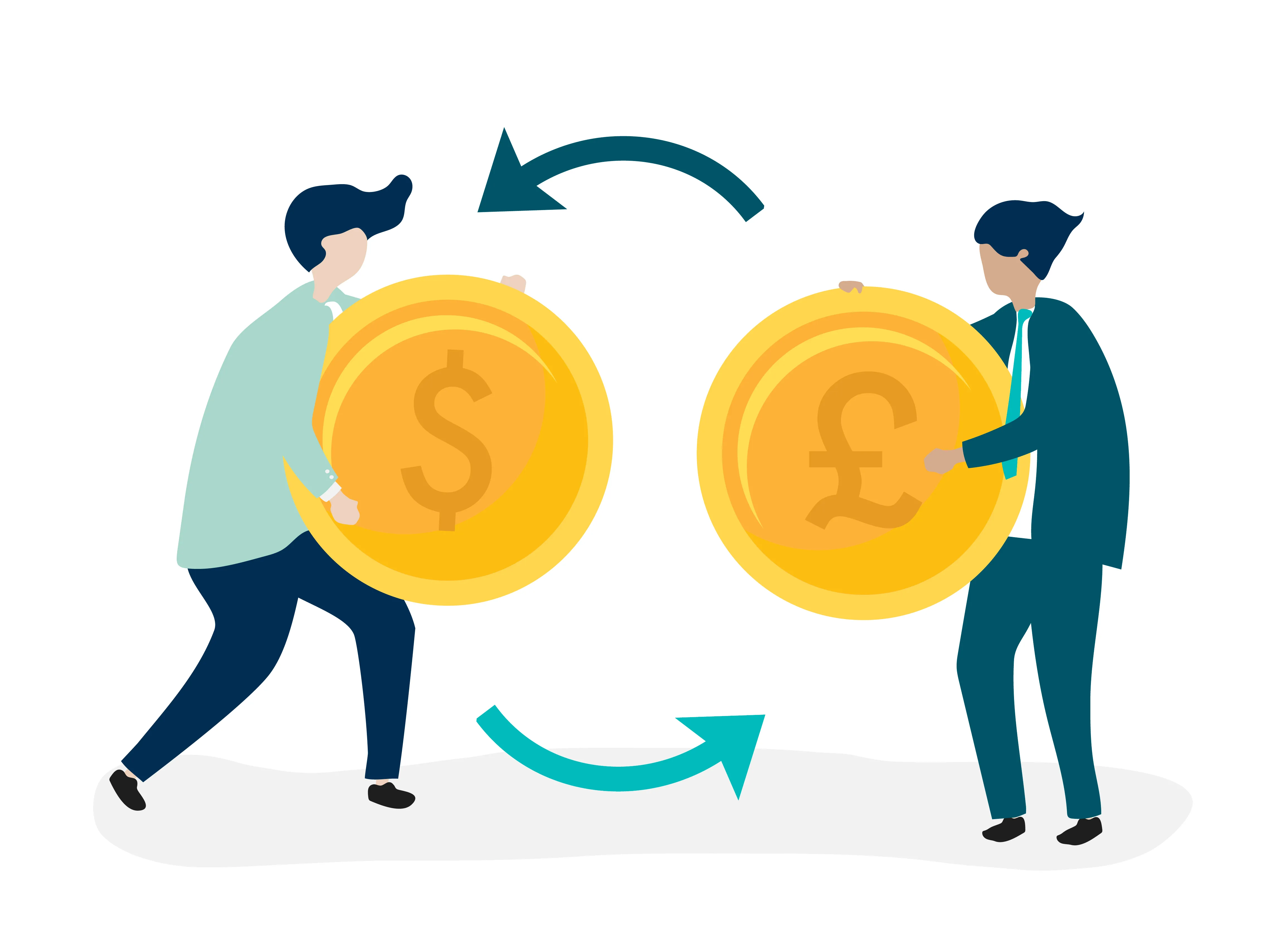
This worksheet is about exchange rates. You will take a detailed look at the exchange rate between two different currencies.
Imagine you've just arrived from a Eurozone country to Japan for your vacation. At the airport, you're eager to exchange your Euros for Japanese yen, but the exchange rate isn't what you expected, leaving you with fewer yen than anticipated. Later, while relaxing in a cozy café, you overhear a conversation about how the exchange rate frequently fluctuates. This piques your curiosity, and you start wondering why this happens. Why can't the exchange rate remain constant? As you ponder this, you begin to explore the factors that influence currency exchange rates and how they impact your travel budget.
📝 Task

Causes of exchange rate changes
Exchange rates are the prices at which one currency can be exchanged for another, and they fluctuate due to various factors. One of the most significant reasons for these changes is the supply and demand for currencies. Imagine a popular sneaker brand; when everyone wants its latest release, the price goes up. Similarly, if many people want to buy a particular currency, its value increases. Conversely, if fewer people want it, the value decreases.
Interest rate differences between countries also play a crucial role. If a country's interest rates are higher compared to others, investors are attracted to save or invest there because they get more returns. This increases the demand for that country's currency, boosting its value.
Inflation, which is the rate at which prices for goods and services rise, affects exchange rates too. High inflation means your money buys less, leading to a decrease in currency value. In contrast, countries with low inflation typically see their currencies remain strong.
Economic and political stability is another key factor. Countries with stable governments and thriving economies attract more foreign investments. This increased demand for their currencies can lead to higher exchange rates. On the flip side, political turmoil or economic challenges can make a currency less appealing, causing its value to drop.
A country's trade balance, which is the difference between what it exports and imports, impacts its currency value as well. If a country exports more than it imports, the demand for its currency rises, increasing its value. However, if it imports more than it exports, the currency's value tends to fall.
Speculation also influences exchange rates. Traders and investors often buy and sell currencies based on their predictions of future movements. If many speculators believe that a currency will rise in value, they buy it, leading to an actual increase in its value.
Currently, the exchange rate between the Euro and the Japanese yen is experiencing fluctuations. One reason is the differing economic landscapes in Europe and Japan. Europe is grappling with various economic challenges, while Japan showcases relative stability. Additionally, the interest rate policies between the European Central Bank and the Bank of Japan play a significant role. The Bank of Japan maintains a loose monetary policy with low interest rates, whereas the European Central Bank is working to raise interest rates to combat inflation. This results in higher demand for the yen compared to the Euro.
In summary, exchange rates are influenced by a myriad of factors, including supply and demand, interest rate differences, inflation, economic and political stability, trade balances, and speculation. These elements often interact simultaneously, causing exchange rates to change rapidly and unpredictably.
📝 Add the causes of exchange rate fluctuations from the previous task.

Entrepreneur

Consumer

Tourist