
Picture Stories
.png?alt=media&token=9dabe16f-9c94-4ae9-8c9a-29386d14e6ad)

The Yellow Kid
"The Yellow Kid" is an important comic strip from the late 19th century, often considered the first true comic strip in American newspapers. Created by Richard F. Outcault, it was first published in 1895 in the New York World newspaper. The comic featured a bald, snaggle-toothed boy wearing a bright yellow nightshirt, known as the Yellow Kid. The setting was a poor neighborhood, and the strips humorously depicted the everyday life of the Kid and his friends.
The Yellow Kid became famous for its unique style and use of speech balloons, which were a new and innovative way to show dialogue in comics. This comic strip played a key role in the rise of "yellow journalism," a term used to describe sensationalized news stories. The Yellow Kid was so popular that it appeared in different products, from toys to advertising, making it one of the first comic characters to achieve mass merchandising success. Today, it is remembered as a pioneer in the comic strip world, influencing the development of modern comics.
Task: Look at the following image from "The Yellow Kid". Does this remind you of comic strips nowadays? What is the same, what is different?

Well hully gee here's to you
The phrase "well hully gee here's to you" from "The Yellow Kid" comic strip captures the playful and whimsical nature of the character, Mickey Dugan, known as the Yellow Kid. This expression reflects the slang and informal language used humorously in the comic, contributing to its appeal to readers in the late 19th century. The Yellow Kid's use of such phrases helped establish a unique voice for the character and contributed to the comic strip's role in shaping early American popular culture.
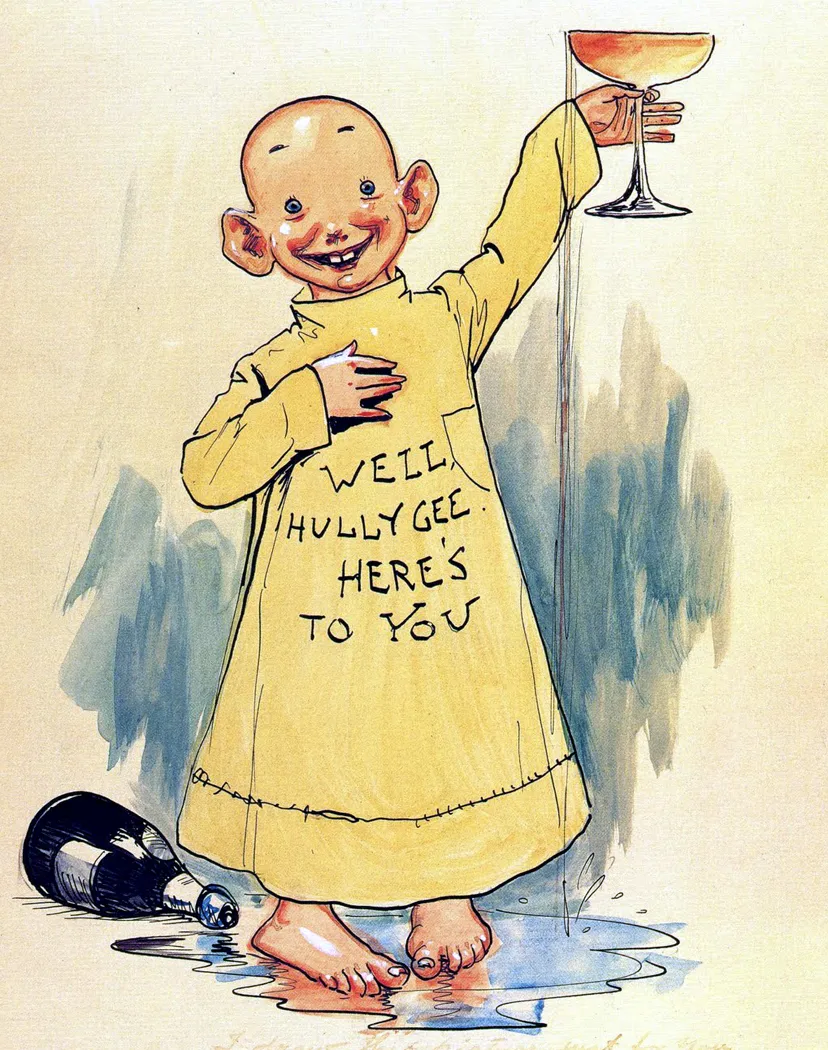
Richard Felton Outcault - http://en.wikipedia.org/wiki/Image:YellowKid.jpeg Cropped, sized; original from http://www.toonopedia.com/yellow.htm (Yellow Kid is public domain circa 1897)

Task
Read the following text about the origin of picture stories. Then answer the questions.

Origin of picture stories
Picture stories, often known as comics or graphic novels, have a fascinating history and origin. They combine visuals and text to tell a story, making them an engaging form of storytelling.
The origin of picture stories can be traced back to ancient times. Egyptian hieroglyphs, which used pictures to convey messages, are among the earliest examples. In the Middle Ages, narrative art, like the Bayeux Tapestry, depicted historical events through sequential images.
However, the modern comic book format began to take shape in the late 19th and early 20th centuries. In the 1890s, newspaper comic strips like "The Yellow Kid" gained popularity in the United States. These early comics used humor and simple illustrations to entertain readers. By the 1930s, comic books became widely available, with superheroes like Superman capturing the imagination of young readers.
The meaning of picture stories lies in their ability to convey complex narratives through a blend of visual art and text. They can tackle a wide range of themes, from action and adventure to social issues and personal experiences. Picture stories also encourage creativity and imagination, allowing readers to interpret the visuals and connect them with the dialogue.
Today, picture stories are a global phenomenon, appealing to audiences of all ages and backgrounds, and continue to evolve as a powerful storytelling medium.
Select the correct answer from the options provided.

Your first impression
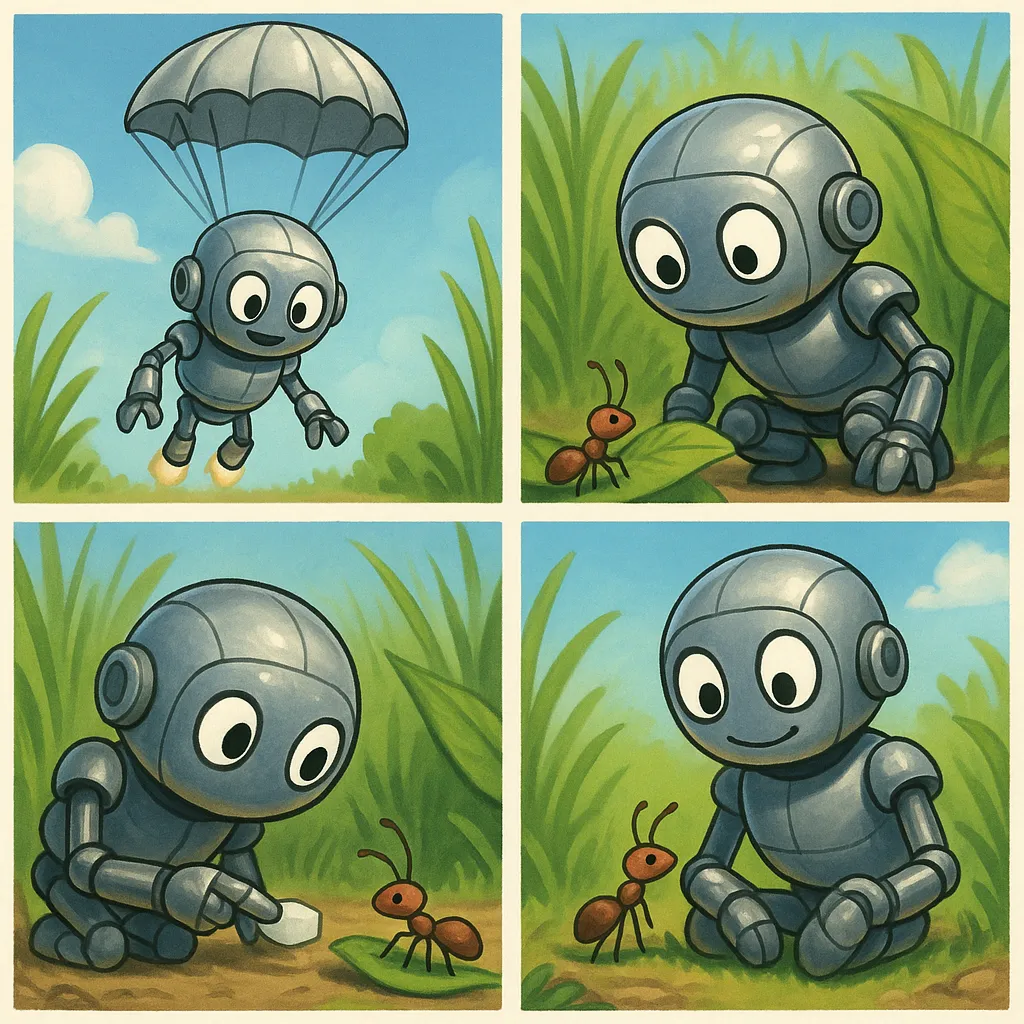
Look at the following picture story and discuss your ideas in small groups or with the entire class:
- What is happening?
- Is it a funny, interesting, sad, etc. story?

More detail
Now look at the picture story in more detail and answer the questions.
Select the correct answer from the options provided.

Your own picture story
Now it's your turn! Come up with your own idea for a picture story. The following guideline will help you.

Guidelines for your own picture story
Step 1: Setting the Scene
Start by establishing the setting for your story. Choose a location that creates a specific mood or atmosphere, like a dimly lit alley for mystery. Use colors and lighting to enhance the mood. Shadows and light sources, such as streetlamps, can add depth and intrigue to your setting.
Step 2: Introducing the Character
Introduce a central character who will drive the story. Choose an interesting figure, like a raccoon, and add unique features such as oversized goggles to give it personality. Think about how the character’s appearance and expression can hint at its intentions and emotions.
Step 3: Building Curiosity
Develop the story by showing the character becoming more engaged with its surroundings. Use body language to convey emotions and intentions. For example, if the raccoon climbs onto the trash can, it signals anticipation and readiness to explore. This progression keeps the audience interested.
Step 4: Presenting Challenges
In the next panel, introduce a challenge or conflict. For instance, uncovering a set of tools suggests a problem-solving angle. This step is crucial as it transforms curiosity into action and adds depth to the story. Ensure the character’s response shows resourcefulness and creativity.
Step 5: Achieving Resolution
Conclude the story with a resolution. Show the character achieving its goal, like finding a treasure trove of food. This outcome should reflect the themes of the story, such as ingenuity and the joy of small victories. Use expressions and visual elements to convey delight and satisfaction.
Lade Zeichenfeld...
.jpg%3Falt%3Dmedia%26token%3D08a6b0f4-c4b0-4123-834b-d4b05e7a6325)

Present your picture story
Show everyone what you created! Show your picture story to the rest of the class. When presenting your picture story, tell the others
- how you came up with the idea
- what you want to express with your picture story
- what the biggest challenges were when creating the picture story.