Die Radiosendung

TT
by to-teach Team
3 pagesab Klasse 5non-subject specific content, Politics, Geography, German
Template

Loading preview…

Your worksheet

Enter the topic of the radio show.

Need an idea?

Popular topics from other teachers

How our AI templates work

  • Content gets adapted

    Examples, texts and tasks match your focus.

  • Method & structure stay

    The didactically reviewed structure of the template won't change.

Description

Zielsetzung: Das übergeordnete Lernziel des Arbeitsblattes ist das Hörverstehen und die kritische Auseinandersetzung mit Informationen aus einer Radiosendung über ein gewähltes Thema.


Inhalte und Methoden: In Form eines Gesprächs werden Informationen zu verschiedenen Teilbereichen des gewählten Themas geliefert. Die Methode umfasst das Anhören von Audiomaterial und das Beantworten von Wahr/Falsch-Fragen sowie Multiple-Choice-Fragen.


Kompetenzen:

  • Trainieren des Hörverstehens
  • Kritisches Denken und Bewertung von Informationen
  • Analyse und Auswahl korrekter Informationen


Zielgruppe und Niveau: Unter- und Mittelstufe
Similar worksheets

View all
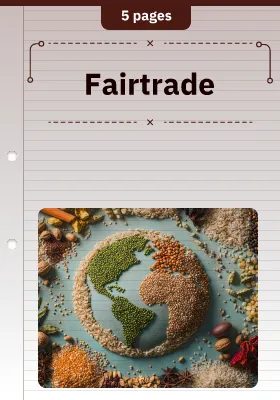
Fairtrade

Fairtrade

This worksheet aims to introduce students to the concept of Fairtrade, its principles, benefits, and common products, encouraging them to understand and support ethical consumption.


Content and methods: The worksheet begins by asking students to brainstorm their existing knowledge about Fairtrade and Fairtrade products, leading to a collaborative mind map activity. A pre-prepared mind map is provided for teachers as a sample solution, illustrating Fairtrade's products, principles, benefits, challenges, and certification bodies. Students then watch a video titled "What is Fairtrade?" and answer questions about its benefits for coffee farmers, the use of the Fairtrade premium, and the development and monitoring of Fairtrade standards. The worksheet then delves into a specific Fairtrade product, through a narrative. Multiple-choice questions assess comprehension of this text. Finally, students are prompted to reflect on what they can do to support Fairtrade, and a bonus recipe with a Fairtrade product is included to encourage practical application.


Competencies:

  • Knowledge acquisition about Fairtrade principles, products, and benefits
  • Understanding of ethical consumption and its impact
  • Reading comprehension and information extraction
  • Collaborative learning through mind mapping
  • Critical thinking about supply chains and product origins


Target group: 5th-7th grade


SDGs:

  • 1st goal (“End poverty in all its forms everywhere”): The worksheet explains how Fairtrade cooperatives provide farmers in Ghana with fair prices for their cocoa , enabling them to better support their families and improve the overall living standards of their communities.
  • 8th goal (“Promote sustained, inclusive and sustainable economic growth, full and productive employment and decent work for all”): The material highlights that Fairtrade-certified factories ensure workers are paid fairly and operate in safe conditions , while also helping coffee farmers receive specific benefits through the Fairtrade premium and monitored standards.

GeographySustainable Development Goals (SDG)Politics
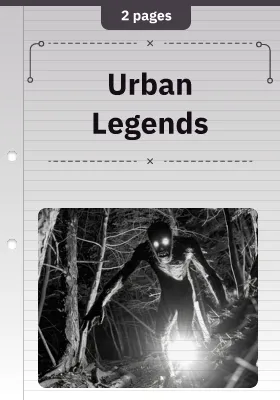
Urban Legends

Urban Legends

This worksheet aims to introduce students to the concept of urban legends, their characteristics, and how they spread, encouraging creative storytelling and critical analysis of narrative elements.


Content and methods: The worksheet begins by having students listen to a voice message (audio content) that refers to an urban legend and asks them how they would respond to it. It then defines urban legends as modern myths often passed off as true, involving supernatural events or eerie figures, and spreading through word of mouth or the internet, evolving over time. An example is provided to illustrate these characteristics. The worksheet lists common characteristics of urban legends, such as spreading through word of mouth, containing a moral lesson, including horror or humor, being presented as true, involving common fears, featuring anonymous sources, and changing over time. Students are then tasked with identifying these features in the story from the initial voice message. The main creative activity involves students working in groups to create their own urban legend, incorporating as many of the listed characteristics as possible, and then presenting it to the class in a convincing and scary manner.


Competencies:

  • Listening comprehension and initial critical response
  • Understanding and identifying characteristics of urban legends
  • Creative writing and storytelling
  • Collaborative teamwork
  • Oral presentation and persuasive communication skills


Target group: 6th-10th grade

non-subject specific contentEnglish