

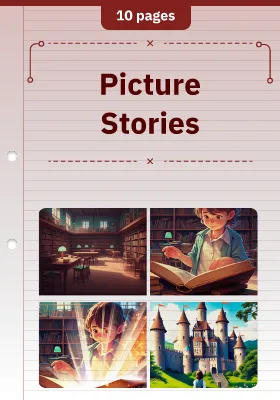
Picture Stories
The students learn about the origins of picture stories, analyze a given picture story in detail and finally come up with a concept to draw one themselves.
Contents and methods:
The students will first look at a picture from an old comic strip and think about similarities and differences compared to comic strips nowadays. They will learn about the history of picture stories and answer multiple choice questions about it. Then they will have a look at a modern (AI created) picture story, give their first impressions and answer open and guided questions relating the story. Finally, the students will (with the help of a guide) create a concept for their own picture story that they can draw.
Skills:
- Visual literacy
- Reading comprehension
- Answering multiple choice questions about a written text
- Answering open questions about a text
- Visual story development
Target group:
Grades 8-10
Literature Smartphone Puzzle
Learners will figure out who a literary character could be by using their previously acquired knowledge about literary works.
Content and methods:
Learners will read a chat conversation, look at photos and listen to a voice message that they discovered on a smartphone they found. Learners will answer true/false questions and finally answer the question whose smartphone it is they found.
Competencies:
- Reading comprehension
- Listening comprehension
- Answer true/false questions on a given topic
- Refer to background knowledge
Target group and level:
Grade 7 and higher