

Affirmations
This worksheet aims to introduce students to the concept and benefits of positive affirmations as a tool to overcome negative self-talk. It encourages students to adopt a growth-oriented mindset by reframing challenges, mistakes, and effort as essential parts of personal development and mental well-being.
Content and methods: The worksheet defines affirmations and explains their psychological impact on rewiring the brain. It presents four core thematic areas—embracing challenges, valuing effort, learning from mistakes, and celebrating progress—illustrated with supportive imagery and motivational prompts. Methodologically, it uses "Think of" prompts to trigger personal reflection on past successes and lessons learned. Finally, it transitions from theory to practice by tasking students with creating their own personalized affirmation cards.
Competencies:
- Self-Reflection: Recalling and analyzing personal experiences of overcoming difficulties and learning from errors
- Emotional Regulation: Using positive statements to challenge and manage self-sabotaging or negative thoughts
- Resilience Building: Understanding how to grow stronger through challenges and consistent effort
- Creative Expression: Synthesizing learned concepts into a creative personal affirmation card
Target group: Grades 4-7
Growth Mindset
This worksheet aims to introduce students to the concept of a growth mindset, teaching them that intelligence and abilities can be developed through dedication and hard work. It specifically focuses on the "power of yet" to help students reframe challenges as opportunities for future growth.
Content and methods: The worksheet provides a comparative overview of growth versus fixed mindsets, highlighting behaviors such as persistence and learning from criticism. It utilizes a narrative story to illustrate how the "power of yet" overcomes frustration. Methodologically, the worksheet employs self-reflection tools, including a mind map for goal-setting and structured "Mistake" and "Effort" trackers to help students analyze their emotional responses and progress during the learning process.
Competencies:
- Self-reflection: Analyzing emotional and physical responses to mistakes
- Metacognition: Understanding the learning process and the value of effort as a path to mastery
- Resilience: Developing persistence in the face of setbacks and viewing failures as lessons
- Goal Setting: Creating strategic plans (mind maps) to achieve skills not "yet" mastered
Target group: Grades 4-6 (Primary/Lower Secondary level).
Dream Journeys
This worksheet aims to stimulate imagination and relaxation in students through a guided visualization exercise, encouraging creative expression of their internal experiences.
Content and methods: The worksheet instructs students to prepare for a "dream journey" by getting comfortable and closing their eyes. A narrative guides them through a vivid imaginative experience. This guided imagery aims to evoke feelings of calm, happiness, and wonder. After listening to the story, the main task for students is to draw their dream journey, allowing them to visually represent their imaginative experience.
Competencies:
- Imagination and creative visualization
- Listening comprehension
- Emotional regulation and relaxation techniques
- Artistic expression through drawing
Target group: 1st-4th grade
Superheroes have Strengths and Weaknesses
This worksheet aims to explore the concept of strengths and weaknesses through the lens of superheroes, encouraging students to identify characteristics, engage in creative writing, and reflect on personal qualities.
Content and methods: The worksheet begins with a diary entry from a superhero / a superheroine detailing their origins, powers, skills, challenges in the modern world, and a recent heroic act. Students read this text and answer comprehension questions to identify their superhero name, typical characteristics, strengths, weaknesses, and exciting moments. Subsequently, students are prompted to choose a hero/heroine that fascinates them, fill out a profile describing their chosen hero's name, characteristics, strengths, weaknesses, what they like about them, what they'd like to know, and experienced adventures, with the intention of presenting it to the class. The worksheet culminates in a creative writing task where students write a fantasy story about an adventure they would experience as their chosen hero/heroine, including what they would do and what they would be afraid of, followed by a drawing activity where they illustrate themselves as a hero or heroine in this adventure.
Competencies:
- Reading comprehension
- Character analysis
- Creative writing
- Self-expression
- Presentation skills (implied by "present your hero/heroine to your class")
- Artistic expression
Target group: 3rd-6th grade
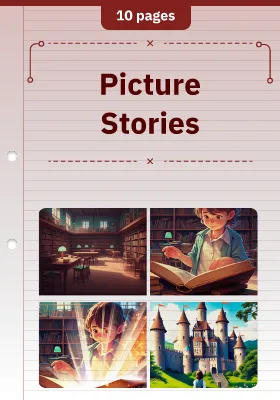
Picture Stories
The students learn about the origins of picture stories, analyze a given picture story in detail and finally come up with a concept to draw one themselves.
Contents and methods:
The students will first look at a picture from an old comic strip and think about similarities and differences compared to comic strips nowadays. They will learn about the history of picture stories and answer multiple choice questions about it. Then they will have a look at a modern (AI created) picture story, give their first impressions and answer open and guided questions relating the story. Finally, the students will (with the help of a guide) create a concept for their own picture story that they can draw.
Skills:
- Visual literacy
- Reading comprehension
- Answering multiple choice questions about a written text
- Answering open questions about a text
- Visual story development
Target group:
Grades 8-10
Literature Smartphone Puzzle
Learners will figure out who a literary character could be by using their previously acquired knowledge about literary works.
Content and methods:
Learners will read a chat conversation, look at photos and listen to a voice message that they discovered on a smartphone they found. Learners will answer true/false questions and finally answer the question whose smartphone it is they found.
Competencies:
- Reading comprehension
- Listening comprehension
- Answer true/false questions on a given topic
- Refer to background knowledge
Target group and level:
Grade 7 and higher
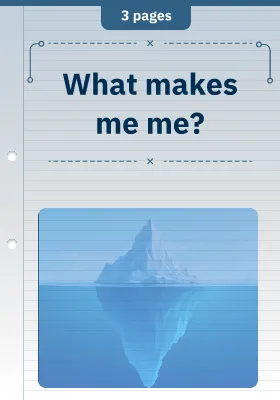
What makes me me?
The overarching learning goal of the worksheet is to help students understand their identity by exploring various aspects that contribute to who they are, such as personal experiences, hobbies, and relationships.
Content and Methods:
The worksheet focuses on topics such as self-reflection, the significance of personal experiences, and the concept of identity as a puzzle made up of different pieces. Methodologically, it employs creative activities like drawing a "Life Painting," answering reflective questions, and using audio content to enhance engagement and understanding.
Competencies:
- Development of self-awareness and personal identity.
- Enhancement of creative expression through artistic representation.
- Improvement of reflective thinking and communication skills.
Target Group and Level:
The worksheet is designed for elementary to middle school students, suitable for those in early stages of personal and social development.
Smartphone Puzzle
Students learn to analyze information from various digital sources and link it logically in order to draw conclusions.
Content and Methodology: The worksheet offers an interactive puzzle task based around a found smartphone. The students analyze chat histories, pictures and an audio file to identify the owner of the smartphone.
Skills:
- Critical analysis of texts and media
- Logical thinking and reasoning
- Understanding historical and/or scientific contexts
Target Audience and Level: Suitable for teaching at lower secondary level.
Coloring Picture
Color in a picture on a topic of your choice
Content and methods: An image that can be colored in
Competencies:
- stay in the lines
Target group and level:
Elementary school