to teach logo
Sign up

Basic knowledge: Politics

TT
by to-teach Team
3 pagesGrade 7 and abovePolitics
Template

Loading preview…

Your worksheet

Enter a basic political topic and receive a basic text with related tasks.

Need an idea?

Popular topics from other teachers

How our AI templates work

  • Content gets adapted

    Examples, texts and tasks match your focus.

  • Method & structure stay

    The didactically reviewed structure of the template won't change.

Description

Objective:

Learners acquire a basic understanding of a fundamental topic in politics.

Content and methods:

The worksheet teaches the theoretical basics of the selected topic. The material is presented in an informational text, followed by multiple-choice questions and open-ended reflection tasks to assess learning outcomes.

Skills:

  • Specialized knowledge of the topic

Target group and level:

Grade 7 and above
Similar worksheets

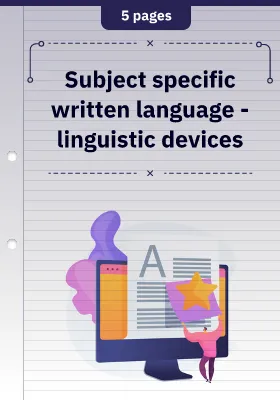
Subject specific written language - linguistic devices

Subject specific written language - linguistic devices

Learning Objectives

The overarching learning objective is to develop students’ awareness and mastery of the characteristics of academic and subject-specific language, as well as to strengthen their ability to transform language. Students should learn to analyse typical features of academic texts (technical terminology, passive voice, and nominal style) according to defined criteria, reflect on their functional effects in terms of objectivity and how they guide the reader, and purposefully translate dense, nominalised academic language into clear, accessible verbal style using active voice.

Content and Methods

The worksheet introduces the key characteristics of academic non-fiction texts (technical terminology, passive voice, and nominal style) and combines text analysis with practical language exercises. Working with a subject-specific text, students first compile a glossary of technical terms with context-based definitions and distinguish between passive constructions and nominal style using a two-colour highlighting technique.

Building on this, they conduct a functional stylistic analysis to examine the intended effects of linguistic density and the author’s conveyed stance towards the subject matter. The worksheet concludes with an active language transformation task in which students rewrite a highly nominalised example sentence that omits the agent, turning it into dynamic active-voice sentences. This involves breaking down complex verb-noun constructions and explicitly introducing the actors performing the actions.

Competencies

  • Linguistic and grammatical analysis: Confidently identifying and clarifying technical terminology, as well as recognising syntactic forms of linguistic compression (nominal style and passive constructions).
  • Functional and stylistic judgement: Reflecting on the rhetorical effects and functions of linguistic distance, objectivity, and impersonal presentation in academic texts.
  • Language transformation: Purposefully translating complex, agentless nominal constructions into clear, action-oriented active sentences using verbal style.
  • Lexical comprehension: Deriving the meaning of unfamiliar or highly specialised technical terms from context and formulating concise definitions (glossary work).

Target Group and Level

Upper secondary school (advanced level).

GeographyBiologyPoliticsChemistryHistory
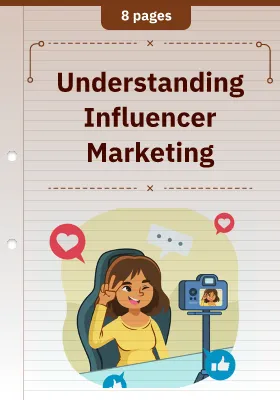
Understanding Influencer Marketing

Understanding Influencer Marketing

This worksheet aims to raise students’ awareness of the mechanisms, economic dimensions, and psychological strategies of modern digital marketing in everyday life.

Content and Methods: The material focuses on the economic significance of social media marketing based on statistical data, as well as the analysis of specific digital posts. Methodologically, the worksheet relies on a combination of practical case studies—in which an exemplary social media post is deconstructed both textually and statistically—and theoretical insights into behavioral economic effects. In addition, the material encourages multi-perspective discussion through reflective writing assignments and the comparison of contrasting stakeholder perspectives. Finally, the discussion of complex issues is used to synthesize what has been learned into the formation of independent judgments.

Competencies:

Analytical and Deconstructive Competence: The ability to systematically examine media content and linguistic and statistical devices for their manipulative or promotional effects

Reflective and Critical Thinking Competence: The ability to critically examine one’s own consumer behavior and evaluate economic phenomena from different perspectives

Media and Economic Competence: Understanding of digital market mechanisms, psychological influence strategies such as the authority bias or the bandwagon effect, and their impact on the economy

Target Audience and Level: 9th/10th grade

EconomicsPolitics