to teach logo
Sign up

Die Geschichte des Osmanischen Reiches

TT
by to-teach Team
5 pages10. KlasseHistory, Politics
Template

Loading preview…

Your worksheet

Add an event from the history of the Ottoman Empire. Learners will study it in depth in an informational text and consider the consequences of the event.

Need an idea?

Popular topics from other teachers

How our AI templates work

  • Content gets adapted

    Examples, texts and tasks match your focus.

  • Method & structure stay

    The didactically reviewed structure of the template won't change.

Description

Zielsetzung: Das Arbeitsblatt bietet einen umfassenden Einblick in die Geschichte des Osmanischen Reiches, von seiner Gründung und Expansion über seine Blütezeit und seinen Niedergang bis hin zu seiner Rolle als Imperium. Es zielt darauf ab, die Schüler:innen für die Dynamik, die kulturelle Vielfalt und die politischen Entwicklungen dieses Vielvölkerstaates zu sensibilisieren.

Inhalte und Methoden:

Das Arbeitsblatt beginnt mit einer kurzen Einführung in das Osmanische Reich als eine der mächtigsten politischen und kulturellen Kräfte seiner Zeit. Ein YouTube-Video dient als erste Informationsquelle, um einen Überblick über die Geschichte des Reiches zu vermitteln. Offene und Multiple-Choice-Fragen festigen die Inhalte. Der zweite Teil des Arbeitsblatts vertieft das Thema mit einem Text über das Osmanische Reich als Vielvölkerstaat. Der Text beschreibt die Organisation des Osmanischen Reiches vor dem Hintergrund des Imperiumsbegriffs. Im Text wird ein Schwerpunkt auf das gewählte Ereignis gelegt und in den Kontext eingeordnet. In anschließenden offenen Fragen arbeiten die Schüler:innen die Merkmale eines Imperiums im Osmanischen Reich heraus.

Ein Bonus-Zeitstrahl fordert die Schüler:innen abschließend auf, die wichtigsten Jahreszahlen der Geschichte des Osmanischen Reiches zuzuordnen.

Kompetenzen:

  • historische Sachverhalte in Zusammenhängen darstellen (Narration)
  • das Osmanische Reich als Imperium charakterisieren (multiethnisches Imperium, Islam, Kalifat, Scharia)

Zielgruppe und Niveau: 10. Klasse
Similar worksheets

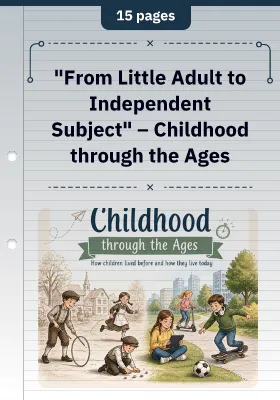
"From Little Adult to Independent Subject" – Childhood through the Ages

"From Little Adult to Independent Subject" – Childhood through the Ages

This worksheet aims to provide trainee teachers with a historically informed and socially critical understanding of the life stage known as ‘childhood’. Learners are to be made aware that childhood is not a rigid, biological state, but is subject to constant social change. They will learn to analyse historical patterns of upbringing and living environments, to contextualise the contemporary view of the child (including the UN Convention on the Rights of the Child), and to draw conclusions for their own professional approach by comparing the past and the present.

Content and methods:

This worksheet combines historical text analysis, the development of empathy, analysis of contemporary issues and research into international law. Following a personal reflection and an analysis of a historical period, the pupils write a fictional diary entry from a child’s perspective and contrast this with the reaction of a child today. They then map out the cornerstones of modern childhood in a practical matrix and compare historical and contemporary living conditions. The activity concludes with research into the UN Convention on the Rights of the Child, including its historical context, and a reflection on their own pedagogical approach.


Competencies:

Learners can...

  • Explain the concept of childhood as a socially shaped and historically changeable construct.
  • Analyse children’s historical living environments in terms of educational objectives, work requirements and legal status, guided by specific criteria.
  • Develop historical empathy through methods of shifting perspectives and reflect on different living conditions from multiple perspectives.
  • Identify the dimensions of modern childhood (including subject status, institutionalisation and mediatisation) and illustrate them using concrete examples from practice.
  • Independently research articles of the UN Convention on the Rights of the Child, place them in their historical context and relate them to today’s image of the child.
  • Use historical insights to critically examine current patterns of upbringing and apply them to one’s own professional approach.


Target group and level:

Adult students or trainees in the field of social pedagogy, particularly aspiring educators.


Note: Internet access is required for the research task

PedagogySocial PedagogyHistoryHealth and Social Care
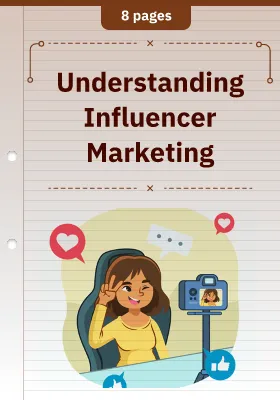
Understanding Influencer Marketing

Understanding Influencer Marketing

This worksheet aims to raise students’ awareness of the mechanisms, economic dimensions, and psychological strategies of modern digital marketing in everyday life.

Content and Methods: The material focuses on the economic significance of social media marketing based on statistical data, as well as the analysis of specific digital posts. Methodologically, the worksheet relies on a combination of practical case studies—in which an exemplary social media post is deconstructed both textually and statistically—and theoretical insights into behavioral economic effects. In addition, the material encourages multi-perspective discussion through reflective writing assignments and the comparison of contrasting stakeholder perspectives. Finally, the discussion of complex issues is used to synthesize what has been learned into the formation of independent judgments.

Competencies:

Analytical and Deconstructive Competence: The ability to systematically examine media content and linguistic and statistical devices for their manipulative or promotional effects

Reflective and Critical Thinking Competence: The ability to critically examine one’s own consumer behavior and evaluate economic phenomena from different perspectives

Media and Economic Competence: Understanding of digital market mechanisms, psychological influence strategies such as the authority bias or the bandwagon effect, and their impact on the economy

Target Audience and Level: 9th/10th grade

EconomicsPolitics