Erdrotation

TT
by to-teach Team
2 pagesab Klasse 5Geography
Template

Loading preview…

Your worksheet

Enter the name of a country.

Need an idea?

Popular topics from other teachers

How our AI templates work

  • Content gets adapted

    Examples, texts and tasks match your focus.

  • Method & structure stay

    The didactically reviewed structure of the template won't change.

Description

Zielsetzung: Das übergeordnete Lernziel des Arbeitsblattes ist es, Schüler:innen die Erdrotation, ihre Auswirkungen auf Tag und Nacht sowie die Jahreszeiten näherzubringen und ihr Verständnis für die spezifischen klimatischen und phänomenologischen Auswirkungen in einem ausgewählten Land zu vertiefen.


Inhalte und Methoden: Das Arbeitsblatt behandelt die Grundlagen der Erdrotation und ihre Verbindung zum Wechsel von Tag und Nacht sowie den Jahreszeiten. Des Weiteren werden die spezifischen Auswirkungen der Erdrotation auf das Klima und die Jahreszeiten in einem gewählten Land detailliert beleuchtet, einschließlich der Temperaturen im Hochland und in den Küstenregionen, der Regen- und Trockenzeiten sowie des Phänomens der Sonnenfinsternisse. Methodisch wird eine Kombination aus informativen Texten, Aufgaben zur Wissensüberprüfung (Wahr/Falsch-Aussagen) und einem Kreuzworträtsel genutzt. Zusätzlich wird die Anregung zum Anschauen eines Videos über einen QR-Code gegeben, um das Verständnis zu vertiefen.


Kompetenzen:

  • Wissenserwerb und -verständnis bezüglich der Erdrotation und ihrer Auswirkungen
  • Leseverständnis
  • Analytisches Denken (Beurteilung von Wahr/Falsch-Aussagen)
  • Problemlösung (Lösen eines Kreuzworträtsels)
  • Geographisches Wissen


Zielgruppe und Niveau: Unter- und Mittelstufe
Similar worksheets

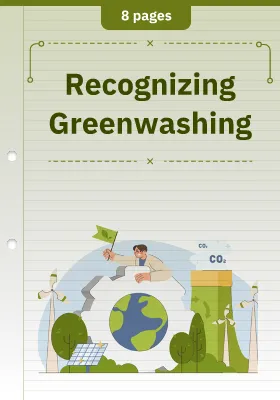
Recognizing Greenwashing

Recognizing Greenwashing

The goal of this worksheet is to enable students to independently identify and critically examine manipulative marketing strategies in retail. Using a specific case study, they will develop the theoretical foundation needed to distinguish between genuine sustainability promises and deliberate consumer deception, so they can make informed, independent consumer decisions in their daily lives.

Content and Methods: The content focuses on the definition and strategic characteristics of greenwashing, its psychological impact, and an analysis of legal consequences. Methodologically, the worksheet combines an image-based case analysis with in-depth journalistic text analysis. A video-based summary of theoretical categories of deception and a practical, criteria-based checklist serve to reinforce knowledge and facilitate active application to students’ own consumer behavior.

Competencies:

Analytical Competence: Students can systematically deconstruct visual design elements, price placements, and advertising messages in digital user interfaces.

Substantive Competence: They understand the definition of the technical term “greenwashing” and can distinguish between vague marketing phrases and verifiable sustainability labels.

Critical thinking skills: Students are able to critically evaluate the discrepancy between corporate sustainability reports and actual environmental impacts.

Reflective thinking skills: They can critically examine their own susceptibility to manipulative sales strategies and identify alternative courses of action.

Target audience and grade level: Intermediate (8th-10th grade)


EconomicsGeography
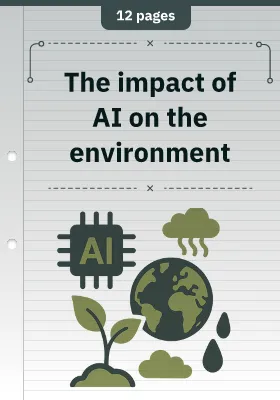
The impact of AI on the environment

The impact of AI on the environment

Objective: The worksheet aims to raise learners' awareness of the environmental impact of artificial intelligence (AI). It trains them to critically analyse the energy and resource consumption of data centres in order to develop strategies for the environmental sustainability of AI technology, particularly through the use of renewable energies.


Contents and methods: The worksheet begins with a warm-up on the learners' personal attitudes towards AI and climate change, followed by information about AI data centres in a selected country/city. Learners analyse advantages and environmental risks using text and cause-and-effect analyses. Methods such as group research, perspective changing and decision-making encourage reflection on sustainability and concrete measures for environmental responsibility.


Competencies:

  • Sustainability awareness: Understanding the ecological footprint of digital technologies (energy and resource consumption).
  • Critical analysis: Weighing technological advantages (climate research, smart farming) against environmental risks.
  • Problem solving: Developing concrete strategies to promote energy efficiency and the use of green energy sources for AI.
  • Understanding of roles: Making informed political decisions from an environmental policy perspective.


Target group and level: Years 8–10 (middle school)


ESD:

  • 12: Responsible consumption and production patterns: This addresses the challenge of raw material extraction (rare earths) and the need for recycling and sustainable procurement.
  •  13: Climate action: The text highlights the role of AI in reducing global emissions and in climate research.

non-subject specific contentEthicsGeographyPoliticsSustainable Development Goals (SDG)