to teach logo
Sign up

Mit Schaubildern arbeiten

TT
by to-teach Team
3 pagesAb Klasse 7History, Politics
Template

Loading preview…

Your worksheet

Upload a diagram and have the appropriate worksheet created for your lesson. Important! For more accurate results, please insert the caption/chart name into the text line.

or

How our AI templates work

  • Content gets adapted

    Examples, texts and tasks match your focus.

  • Method & structure stay

    The didactically reviewed structure of the template won't change.

Description

Zielsetzung: Dieses Arbeitsblatt vermittelt Schüler:innen die Methode der Arbeit mit Schaubildern zur Analyse komplexer politischer Strukturen. Am Beispiel eine gewählten (historischen) Schaubildes sollen sie lernen, Inhalte zu erschließen und kritisch zu hinterfragen.

Inhalte und Methoden: Das Arbeitsblatt beginnt mit einer Einführung in die Wichtigkeit von Schaubildern als Werkzeuge zur übersichtlichen und anschaulichen Darstellung komplexer Informationen. Ein gewähltes Schaubild dient als zentrales Analysematerial. Ein Notizfeld regt zur ersten Beobachtung an. Wahr/Falsch-Fragen überprüfen das grundlegende Verständnis der im Schaubild dargestellten Informationen. Ein separater Abschnitt "Methode: Schaubilder erschließen" bietet eine detaillierte Schritt-für-Schritt-Anleitung zur Analyse. Abschließende offene Schreibaufgaben fordern die Schüler:innen auf, das Schaubild vertiefend zu hinterfragen.

Kompetenzen:

  • Visuelle Analyse: Schüler:innen lernen, komplexe Schaubilder systematisch zu erschließen und die darin dargestellten politischen Strukturen und Zusammenhänge zu verstehen.
  • Kritisches Denken: Die Fähigkeit, die Glaubwürdigkeit und die beabsichtigte Botschaft eines Schaubildes zu kontextualisieren und zu hinterfragen.
  • Informationsentnahme: Sie üben das gezielte Extrahieren relevanter Informationen aus einer grafischen Darstellung.
  • Argumentation und Ausdruck: Sie formulieren eigenständige Beschreibungen und Erläuterungen basierend auf der Analyse des Schaubilds.

Niveau: Ab Klasse 7

Wichtig! Für genauere Ergebnisse bitte Bildunterschrift/Schaubildnamen in die Textzeile einfügen.
Similar worksheets

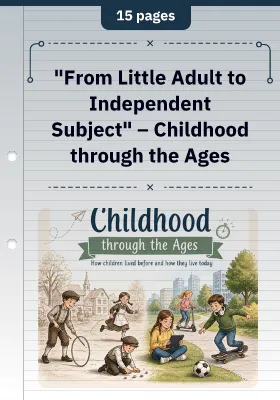
"From Little Adult to Independent Subject" – Childhood through the Ages

"From Little Adult to Independent Subject" – Childhood through the Ages

This worksheet aims to provide trainee teachers with a historically informed and socially critical understanding of the life stage known as ‘childhood’. Learners are to be made aware that childhood is not a rigid, biological state, but is subject to constant social change. They will learn to analyse historical patterns of upbringing and living environments, to contextualise the contemporary view of the child (including the UN Convention on the Rights of the Child), and to draw conclusions for their own professional approach by comparing the past and the present.

Content and methods:

This worksheet combines historical text analysis, the development of empathy, analysis of contemporary issues and research into international law. Following a personal reflection and an analysis of a historical period, the pupils write a fictional diary entry from a child’s perspective and contrast this with the reaction of a child today. They then map out the cornerstones of modern childhood in a practical matrix and compare historical and contemporary living conditions. The activity concludes with research into the UN Convention on the Rights of the Child, including its historical context, and a reflection on their own pedagogical approach.


Competencies:

Learners can...

  • Explain the concept of childhood as a socially shaped and historically changeable construct.
  • Analyse children’s historical living environments in terms of educational objectives, work requirements and legal status, guided by specific criteria.
  • Develop historical empathy through methods of shifting perspectives and reflect on different living conditions from multiple perspectives.
  • Identify the dimensions of modern childhood (including subject status, institutionalisation and mediatisation) and illustrate them using concrete examples from practice.
  • Independently research articles of the UN Convention on the Rights of the Child, place them in their historical context and relate them to today’s image of the child.
  • Use historical insights to critically examine current patterns of upbringing and apply them to one’s own professional approach.


Target group and level:

Adult students or trainees in the field of social pedagogy, particularly aspiring educators.


Note: Internet access is required for the research task

PedagogySocial PedagogyHistoryHealth and Social Care
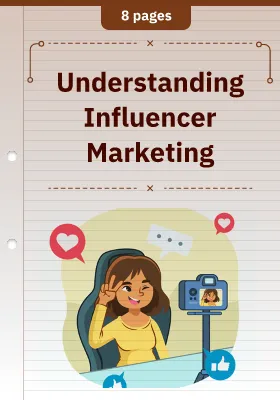
Understanding Influencer Marketing

Understanding Influencer Marketing

This worksheet aims to raise students’ awareness of the mechanisms, economic dimensions, and psychological strategies of modern digital marketing in everyday life.

Content and Methods: The material focuses on the economic significance of social media marketing based on statistical data, as well as the analysis of specific digital posts. Methodologically, the worksheet relies on a combination of practical case studies—in which an exemplary social media post is deconstructed both textually and statistically—and theoretical insights into behavioral economic effects. In addition, the material encourages multi-perspective discussion through reflective writing assignments and the comparison of contrasting stakeholder perspectives. Finally, the discussion of complex issues is used to synthesize what has been learned into the formation of independent judgments.

Competencies:

Analytical and Deconstructive Competence: The ability to systematically examine media content and linguistic and statistical devices for their manipulative or promotional effects

Reflective and Critical Thinking Competence: The ability to critically examine one’s own consumer behavior and evaluate economic phenomena from different perspectives

Media and Economic Competence: Understanding of digital market mechanisms, psychological influence strategies such as the authority bias or the bandwagon effect, and their impact on the economy

Target Audience and Level: 9th/10th grade

EconomicsPolitics