to teach logo
Sign up

Wahlprogramme verstehen

TT
by to-teach Team
10 pagesAb Klasse 10Politics
Template

Loading preview…

Your worksheet

Insert an election platform in PDF format. Students will analyze the content and the specific campaign promises. Note: Because the system has to parse the election platform, generating this worksheet takes significantly longer than other worksheets.

How our AI templates work

  • Content gets adapted

    Examples, texts and tasks match your focus.

  • Method & structure stay

    The didactically reviewed structure of the template won't change.

Description

Zielsetzung:

Das Arbeitsblatt zielt darauf ab, die Lernenden zu einer eigenständigen, begründeten Urteilsbildung im Kontext politischer Partizipation und demokratischer Prozesse zu befähigen. Durch den systematischen Vergleich unterschiedlicher Standpunkte anhand von Quellen werden sie dazu angeleitet, gesellschaftliche Zukunftsfragen kritisch zu hinterfragen und die Vielschichtigkeit politischer Entscheidungen zu erkennen.

Inhalte und Methoden:

Zu Beginn aktivieren die Lernenden ihr Vorwissen sowie persönliche Prioritäten und setzen sich anschließend mit konkreten politischen Themenschwerpunkten auseinander. Mithilfe einer bewertenden Skalierung reflektieren sie zunächst die persönliche Relevanz ausgewählter Kernaussagen. In Partnerarbeit recherchieren und analysieren sie daraufhin die Positionen verschiedener Parteien anhand von Originalquellen und wenden dabei festgelegte Regeln für eine konstruktive Gesprächsführung an. Abschließend werten die Lernenden ihre Ergebnisse aus, reflektieren die Auswirkungen der jeweiligen Positionen auf unterschiedliche gesellschaftliche Gruppen und überprüfen kritisch die Voraussetzungen für belastbare Analysen.

Kompetenzen:

  • Analyse- und Quellenkompetenz: Fähigkeit, authentische Textquellen zielgerichtet nach bestimmten Aussagen zu durchsuchen, Positionen systematisch zu vergleichen und anhand von Primärquellen zu belegen.
  • Urteils- und Orientierungskompetenz: Befähigung, politische Forderungen kriteriengeleitet zu bewerten, eine eigene begründete Meinung zu entwickeln sowie die Betroffenheit und Interessen verschiedener gesellschaftlicher Gruppen einzuschätzen.
  • Kommunikations- und Handlungskompetenz: Eignung, eigene Standpunkte im Team unter Einhaltung von Gesprächsregeln wie der Ich-Perspektive und aktivem Zuhören respektvoll und konstruktiv zu vertreten.
  • Reflexions- und Methodenkritik: Vermögen, die Vollständigkeit von Grundlagen zu hinterfragen und Fehlinterpretationen zu erkennen, die durch unvollständige Daten oder fehlende Kontextinformationen entstehen können.

Zielgruppe und Niveau: Ab der 10. Klasse

Hinweis: Durch das Auslesen des Wahlprogramms dauert die Erstellung des Arbeitsblattes deutlich länger als andere Arbeitsblätter.
Similar worksheets

Self-Assessment & Reading Progress Check

Self-Assessment & Reading Progress Check

Objectives: The main learning aim is to systematically train metacognitive self-monitoring and to overcome passive recognition effects (the fluency illusion) when reading English non-fiction texts. Pupils learn to evaluate their real understanding of a text realistically using the evidence-based Recall & Check method (active recall with the text covered). They diagnose gaps in their memory by comparing their notes directly with the original text, using clear criteria. Finally, they prove and secure their reading success with a step-by-step checklist of test questions (main idea, technical term, cause and effect, link to everyday life).


Content and methods: The worksheet moves from actively reconstructing information from memory, to analysing mistakes, to proving understanding with clear criteria. After a first reading of an English information text without marking anything, pupils cover the text completely. In the first step (“Recall”), they recall the content purely from memory and note down the main message, three to four key facts or processes, and the technical terms they remember. In the second step (“Check”), they uncover the text and compare it with their notes using colours: facts they remembered completely are marked green, while inaccurate, wrong or forgotten information is marked red and added to their notes. The worksheet ends with a four-step checklist of test questions. Here, pupils support their subjective feeling of understanding with concrete written proof in English: writing a key sentence, defining a technical term, explaining a cause-and-effect chain and making a link to everyday life.


Competences:

  • Metacognitive reading and monitoring: consciously monitoring their own understanding of a text, and telling the difference between superficial recognition (passivity) and real remembering and understanding
  • Active recall and reconstruction: structuring, recalling and summarising text content in writing independently, without looking at the text
  • Diagnostic self-checking and error correction: comparing their own notes with the original text using clear criteria (green/red marking) and closing gaps in their knowledge in a targeted way
  • Cause and effect and transfer: proving deeper understanding by describing cause-and-effect relationships precisely and linking what they’ve read to their own lives
  • Foreign language skills: understanding English non-fiction texts, recalling and using technical vocabulary in English (e.g. electric charge, ice crystals, thunder), and explaining content in their own words in written English


Target group and level: Middle School

non-subject specific contentReligionEthicsPhilosophyHistory
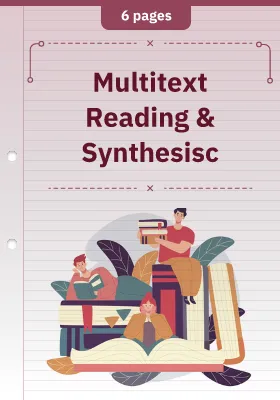
Multitext Reading & Synthesisc

Multitext Reading & Synthesisc

Objectives: The main learning aim is to acquire and consolidate strategies for reading multiple texts and writing a synthesis when dealing with controversial topics, as preparation for academic work. The lesson takes place in English. Pupils learn to evaluate several English sources in a targeted way and to work out agreements, additions and contradictions between perspectives using clear criteria. They also learn to move beyond linear summaries of one text after the other (the “block method”) and to link different positions independently in a coherent, comparative synthesis text in English.

Content and methods: The worksheet is scaffolded in four steps, leading from selective analysis of single texts to writing a text that links them. First, pupils work on two English texts with opposing positions (pro vs. contra) on controversial social and economic issues, using a two-colour marking method (red for the main message/position, purple for arguments/effects). In the second step, they show the overlaps and differences between the two sources in a Venn diagram. Building on this, they go deeper in a criteria-based synthesis table, which focuses on specific aspects of comparison and prevents a simple one-after-the-other presentation. The worksheet ends with a writing workshop: based on the table and using English phrases for comparing and linking ideas (scaffolding connectives), pupils write a synthesis paragraph of 6–8 sentences that combines both perspectives dialectically.

Competences:

  • Multi-text reading and comparison: systematically evaluating, contrasting and comparing several competing English sources in terms of their main messages, lines of argument and overlaps
  • Visual and criteria-based structuring: turning contrasts and similarities between texts into Venn diagrams and aspect-based synthesis tables
  • Synthesis and text production: writing coherent, aspect-based comparative texts in English (moving beyond the block method) by using contrasting and linking phrases in a targeted way (whereas, in contrast to, both authors agree that, similarly, …)
  • Multi-perspective judgement: understanding ambivalent issues in a differentiated way, as a basis for forming a reflected personal opinion
  • Foreign language skills: understanding demanding English opinion texts, using topic vocabulary (e.g. fast fashion, sustainability, recycling) and expressing comparisons and contrasts accurately in written English

Target group and level: High School

non-subject specific contentHistoryEthicsPhilosophyReligion
Sentence Starters & Useful Phrases

Sentence Starters & Useful Phrases

The overarching learning objective is the theory- and model-based acquisition and functional application of sentence starters, sentence connectives and useful phrases (sentence starters). Learners should be enabled to overcome monotonous sentence patterns, to mark causal, comparative, argumentative and synthesising relationships between statements precisely, to create textual coherence, and to express their own reflections and written answers in a logically structured and linguistically varied way.

Content and methods: The worksheet uses the vivid metaphor of "mortar in building a house" to introduce the fundamental role that connectives and sentence starters play in holding a text together, and it groups useful phrases into four functional categories: giving reasons (Because/Since, The reason for this is), comparing things (In contrast, Similar to), sharing your own thoughts (In my opinion, I suspect) and drawing a conclusion (To sum up). Using a thematic reading text, learners practise the phrases in a three-stage progression: first, they complete given sentence starters so that they fit the text; second, they join short individual sentences into more complex sentences using subordinating conjunctions (After, So that, While); finally, they write a reasoned statement on a step in the process, independently including at least three of the sentence starters they have learned.

Competencies:

  • Textual coherence and linking skills: functional use of subordinating and coordinating connectives to structure lines of thought logically
  • Variety in writing and phrasing: overcoming repetitive sentence structures (parataxis) through the targeted use of differentiated sentence starters for giving reasons, making comparisons, expressing opinions and summarising
  • Syntactic transformation skills: purposefully combining isolated main clauses into complex, grammatically correct sentences (hypotaxis), paying attention to verb-second and verb-final word order
  • Text-based argumentation and reasoning skills: formulating independent, criteria-based evaluations and reflections based on information from the subject text

Target group and level: Lower secondary

non-subject specific contentHistorySocial PedagogyEconomicsEthics
Subject specific written language - linguistic devices

Subject specific written language - linguistic devices

Learning Objectives

The overarching learning objective is to develop students’ awareness and mastery of the characteristics of academic and subject-specific language, as well as to strengthen their ability to transform language. Students should learn to analyse typical features of academic texts (technical terminology, passive voice, and nominal style) according to defined criteria, reflect on their functional effects in terms of objectivity and how they guide the reader, and purposefully translate dense, nominalised academic language into clear, accessible verbal style using active voice.

Content and Methods

The worksheet introduces the key characteristics of academic non-fiction texts (technical terminology, passive voice, and nominal style) and combines text analysis with practical language exercises. Working with a subject-specific text, students first compile a glossary of technical terms with context-based definitions and distinguish between passive constructions and nominal style using a two-colour highlighting technique.

Building on this, they conduct a functional stylistic analysis to examine the intended effects of linguistic density and the author’s conveyed stance towards the subject matter. The worksheet concludes with an active language transformation task in which students rewrite a highly nominalised example sentence that omits the agent, turning it into dynamic active-voice sentences. This involves breaking down complex verb-noun constructions and explicitly introducing the actors performing the actions.

Competencies

  • Linguistic and grammatical analysis: Confidently identifying and clarifying technical terminology, as well as recognising syntactic forms of linguistic compression (nominal style and passive constructions).
  • Functional and stylistic judgement: Reflecting on the rhetorical effects and functions of linguistic distance, objectivity, and impersonal presentation in academic texts.
  • Language transformation: Purposefully translating complex, agentless nominal constructions into clear, action-oriented active sentences using verbal style.
  • Lexical comprehension: Deriving the meaning of unfamiliar or highly specialised technical terms from context and formulating concise definitions (glossary work).

Target Group and Level

Upper secondary school (advanced level).

GeographyBiologyPoliticsChemistryHistory
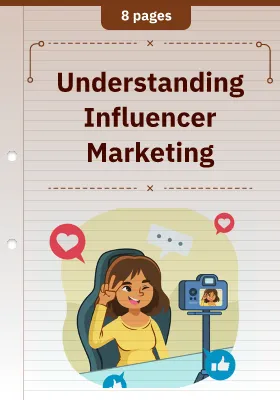
Understanding Influencer Marketing

Understanding Influencer Marketing

This worksheet aims to raise students’ awareness of the mechanisms, economic dimensions, and psychological strategies of modern digital marketing in everyday life.

Content and Methods: The material focuses on the economic significance of social media marketing based on statistical data, as well as the analysis of specific digital posts. Methodologically, the worksheet relies on a combination of practical case studies—in which an exemplary social media post is deconstructed both textually and statistically—and theoretical insights into behavioral economic effects. In addition, the material encourages multi-perspective discussion through reflective writing assignments and the comparison of contrasting stakeholder perspectives. Finally, the discussion of complex issues is used to synthesize what has been learned into the formation of independent judgments.

Competencies:

Analytical and Deconstructive Competence: The ability to systematically examine media content and linguistic and statistical devices for their manipulative or promotional effects

Reflective and Critical Thinking Competence: The ability to critically examine one’s own consumer behavior and evaluate economic phenomena from different perspectives

Media and Economic Competence: Understanding of digital market mechanisms, psychological influence strategies such as the authority bias or the bandwagon effect, and their impact on the economy

Target Audience and Level: 9th/10th grade

EconomicsPolitics