
Planetary Science
PreviewThe planets in our solar system
Look at the following picture and try to put the planets in the correct order.
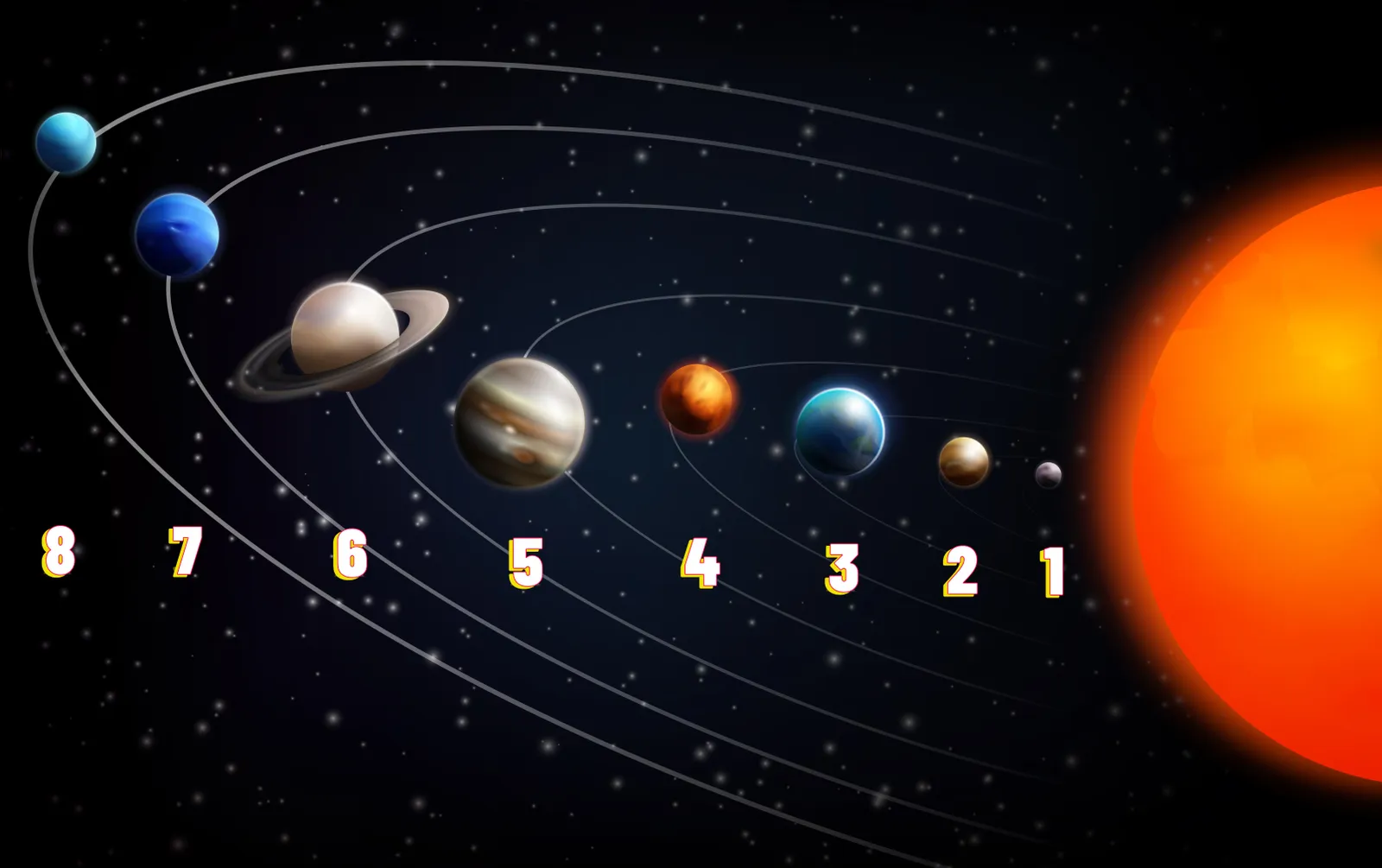
Sort the planets from smallest to furthest distance to the Sun.

A closer look at a planet
Now learn more about a planet in our solar system. Read the text, then fill out the profile on the following page.
Earth
Earth is the third planet from the Sun and the fifth largest in our solar system. It has a diameter of about 12,742 kilometers, making it the largest of the terrestrial planets, which include Mercury, Venus, and Mars. Earth is unique because it is the only planet known to support life.
Earth is made up of different layers. The outer layer is called the crust, which is mostly made of rocks and minerals. Below the crust is the mantle, which is made of hot, semi-solid rock. At the center is the core, which is divided into the outer and inner core, composed mostly of iron and nickel. The movement of the liquid outer core creates Earth's magnetic field.
Earth's atmosphere is vital for life. It is composed mainly of nitrogen (about 78%) and oxygen (about 21%), with small amounts of other gases like carbon dioxide and argon. This atmosphere protects us from the Sun's harmful rays and helps keep the planet warm enough to sustain life.
In the solar system, Earth is the third planet from the Sun, positioned between Venus and Mars. It takes about 365.25 days to orbit the Sun, which is why we have a leap year every four years to keep our calendar in sync.
Earth has one moon that is large compared to other moons in the solar system. This moon affects the planet's tides and stabilizes its rotation, which helps maintain a stable climate. Earth does not have rings like Saturn or Jupiter.
Earth is the only planet known to be habitable. It has water in liquid form, a stable climate, and the right conditions for plants and animals to thrive. Scientists are always looking for other planets where life might be possible, but for now, Earth is our home and the only place where life is confirmed to exist.
In summary, Earth is a large, rocky planet with a life-supporting atmosphere, one moon, and no rings. It is a special place in our solar system, providing a home for countless living organisms, including humans.
.jpg?alt=media&token=09013d50-c012-4273-b59d-3a4f6473c4ec)

Mnemonic to remember the order of planets
Here is a tip how you can remember the order of planets: in the following mnemonic each word starts with the same letter as one of the planets:
my very educated mother just served us noodles
Mercury Venus Earth Mars Jupiter Saturn Uranus Neptune