
AI-powered lesson planning

Physics Worksheets for Secondary School – KS3 & KS4

Year 7-11 (ages 11-16) – National Curriculum aligned.

No credit card required · GDPR compliant

300,000+
Teachers
5,000+
Schools
1,000,000+
Materials created

Physics resources for Secondary School (Year 7-11).

Create worksheets covering forces, energy, electricity, waves, and more. GCSE preparation preparation.

Popular templates

Start with a template and tailor it to your topic
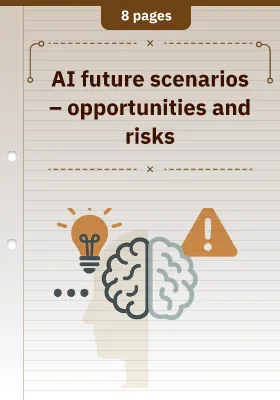
AI future scenarios – opportunities and risks
AI future scenarios – opportunities and risks

The worksheet aims to raise learners' awareness of the opportunities and risks associated with artificial intelligence (AI). They should learn to analyze different perspectives and make cri
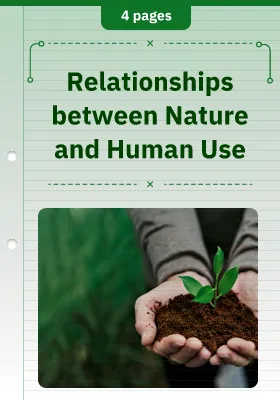
Relationships between Nature and Human Use
Relationships between Nature and Human Use

This worksheet aims to educate students about the diverse ways humans interact with and utilize natural environments across different regions, with a particular focus on the concept of sust
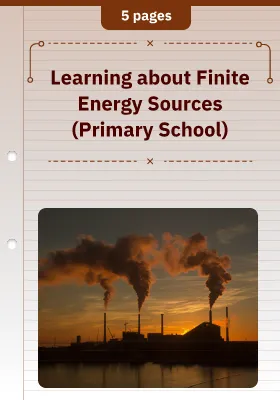
Learning about Finite Energy Sources (Primary School)
Learning about Finite Energy Sources (Primary School)

This worksheet aims to teach students about finite energy sources, specifically on one example, its properties, uses, and the advantages and disadvantages associated with its use. Content and methods: The worksheet defines finite energy sources and provides specific examples. It then focuses on one example of a finite energy source, detailing its origin, quantity on Earth, historical use, primary applications, and advantages. Subsequently, it presents its disadvantages, while also highlighting its finite nature. The methods include reading informational texts and filling out a profile for an energy source, followed by questions that prompt critical thinking and class discussion. Competencies: Reading comprehension Understanding of scientific concepts (finite energy sources, fossil fuels) Analysis of advantages and disadvantages Critical thinking and evaluation Discussion and communication skills Target group: Primary School SDGs: 7th goal (“Ensure access to affordable, reliable, sustainable and modern energy for all”): The worksheet introduces the concept of finite energy sources like coal, gas, and oil, while highlighting the importance of looking for cleaner, more sustainable alternatives such as wind and solar power. 13th goal (“Take urgent action to combat climate change and its impacts”): The text discusses how burning coal releases carbon dioxide, leading to global warming and climate change, and emphasizes the need to protect the environment for future generations.
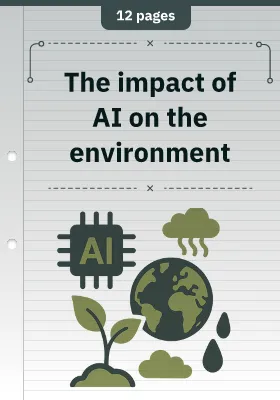
The impact of AI on the environment

The impact of AI on the environment

The worksheet aims to raise learners' awareness of the environmental impact of artificial intelligence (AI). It trains them to critically analyse the energy and resource consumption of data centres in order to develop strategies for the environmental sustainability of AI technology, particularly through the use of renewable energies. Contents and methods: The worksheet begins with a warm-up on the learners' personal attitudes towards AI and climate change, followed by information about AI data centres in a selected country/city. Learners analyse advantages and environmental risks using text and cause-and-effect analyses. Methods such as group research, perspective changing and decision-making encourage reflection on sustainability and concrete measures for environmental responsibility. Competencies: Sustainability awareness: Understanding the ecological footprint of digital technologies (energy and resource consumption). Critical analysis: Weighing technological advantages (climate research, smart farming) against environmental risks. Problem solving: Developing concrete strategies to promote energy efficiency and the use of green energy sources for AI. Understanding of roles: Making informed political decisions from an environmental policy perspective. Target group and level: Years 8–10 (middle school) ESD: 12: Responsible consumption and production patterns: This addresses the challenge of raw material extraction (rare earths) and the need for recycling and sustainable procurement. 13: Climate action: The text highlights the role of AI in reducing global emissions and in climate research.

Browse all templates

Explore all worksheets and start with a template that fits your lesson.

Open library

Benefits

What makes to-teach different

Core physics

Forces, motion, energy, electricity, waves – clear explanations and practice.

Mathematical skills

Equations, calculations, graph interpretation – physics maths support.

Practical skills

Experiment planning, data analysis, evaluation.

FAQ

Yes. Step-by-step worked examples and practice questions.

Ready for better lessons?

Join thousands of teachers who use AI to prep faster, differentiate more easily, and teach more creatively.

GDPR compliant · Ready in 30 sec · No credit card required

Interested in a school license? Book a consultation