Der Lebensraum Boden

TT
by to-teach Team
5 pages5./6. KlasseGeography, Biology, Science
Template

Loading preview…

Your worksheet

Add a soil layer. Learners will then learn more about it from the perspective of a creature living in the soil layer.

Need an idea?

Popular topics from other teachers

How our AI templates work

  • Content gets adapted

    Examples, texts and tasks match your focus.

  • Method & structure stay

    The didactically reviewed structure of the template won't change.

Description

Zielsetzung: Die Lernenden verstehen durch die Erzählungen eines Lebewesens die Bedeutung einer der fünf Bodenschichten.

Inhalt und Methodik: Die Lernenden erfahren mittels eines Textes mehr über das Leben eines Lebewesens in einer der fünf Bodenschichten. Durch eine Audionachricht beschäftigen sich die Lernenden mit der Funktion des Lebewesens in der Bodenschicht und der Relevanz des Bodens für das Ökosystem. Dazu werden inhaltlich relevante Fragen gestellt. Am Ende ist eine Bonusaufgabe in Form eines Kreuzworträtsels angefügt.

Kompetenzen:

  • Räumliche Orientierung stärken
  • Räume als natur- und humangeographische Systeme erfassen

Zielgruppe und Niveau: 5./6. Klasse
Similar worksheets

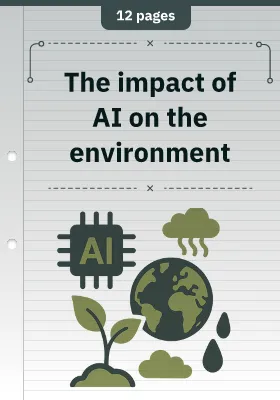
The impact of AI on the environment

The impact of AI on the environment

Objective: The worksheet aims to raise learners' awareness of the environmental impact of artificial intelligence (AI). It trains them to critically analyse the energy and resource consumption of data centres in order to develop strategies for the environmental sustainability of AI technology, particularly through the use of renewable energies.


Contents and methods: The worksheet begins with a warm-up on the learners' personal attitudes towards AI and climate change, followed by information about AI data centres in a selected country/city. Learners analyse advantages and environmental risks using text and cause-and-effect analyses. Methods such as group research, perspective changing and decision-making encourage reflection on sustainability and concrete measures for environmental responsibility.


Competencies:

  • Sustainability awareness: Understanding the ecological footprint of digital technologies (energy and resource consumption).
  • Critical analysis: Weighing technological advantages (climate research, smart farming) against environmental risks.
  • Problem solving: Developing concrete strategies to promote energy efficiency and the use of green energy sources for AI.
  • Understanding of roles: Making informed political decisions from an environmental policy perspective.


Target group and level: Years 8–10 (middle school)


ESD:

  • 12: Responsible consumption and production patterns: This addresses the challenge of raw material extraction (rare earths) and the need for recycling and sustainable procurement.
  •  13: Climate action: The text highlights the role of AI in reducing global emissions and in climate research.

non-subject specific contentEthicsGeographyPoliticsSustainable Development Goals (SDG)