Children's Rights Worldwide

TT
by to-teach Team
4 pagesGrade 4 and aboveGeography, Sustainable Development Goals (SDG), Politics
Template

Loading preview…

Your worksheet

Enter the name of a country with a problematic children's rights situation.

Need an idea?

Popular topics from other teachers

How our AI templates work

  • Content gets adapted

    Examples, texts and tasks match your focus.

  • Method & structure stay

    The didactically reviewed structure of the template won't change.

Description

Objective: This worksheet aims to raise awareness about children's rights challenges in Somalia, particularly regarding education and healthcare, and to foster empathy and critical thinking about global social issues.


Content and methods: The worksheet features a fictional newspaper article, a first-person narrative from a child living in a country with a problematic children's rights situation. Following the article, students answer multiple-choice questions to assess their comprehension of the child's situation and dreams. The worksheet then encourages students to formulate their own questions for the child, promoting empathy and deeper engagement. A subsequent section provides "Further information on the country," detailing the broader context of children's rights violations in the regarding country. True/false questions are used to check understanding of this informational text.


Competencies:

  • Reading comprehension
  • Empathy and perspective-taking
  • Critical thinking about social and humanitarian issues
  • Information extraction and analysis
  • Question formulation


Target group: 4th-6th grade


SDGs:

  • 1st goal (“End poverty in all its forms everywhere”): The worksheet describes how widespread poverty in Somalia forces children like 12-year-old Amina to work in markets carrying heavy bags because their parents lose their jobs and cannot afford food.
  • 4th goal (“Ensure inclusive and equitable quality education and promote lifelong learning opportunities for all”): The material highlights that ongoing conflict has destroyed many schools, leaving children without the opportunity to study, while specifically noting that girls face additional barriers to education due to local group beliefs.
Similar worksheets

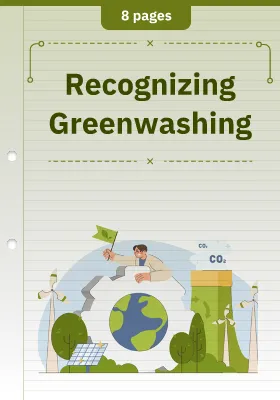
Recognizing Greenwashing

Recognizing Greenwashing

The goal of this worksheet is to enable students to independently identify and critically examine manipulative marketing strategies in retail. Using a specific case study, they will develop the theoretical foundation needed to distinguish between genuine sustainability promises and deliberate consumer deception, so they can make informed, independent consumer decisions in their daily lives.

Content and Methods: The content focuses on the definition and strategic characteristics of greenwashing, its psychological impact, and an analysis of legal consequences. Methodologically, the worksheet combines an image-based case analysis with in-depth journalistic text analysis. A video-based summary of theoretical categories of deception and a practical, criteria-based checklist serve to reinforce knowledge and facilitate active application to students’ own consumer behavior.

Competencies:

Analytical Competence: Students can systematically deconstruct visual design elements, price placements, and advertising messages in digital user interfaces.

Substantive Competence: They understand the definition of the technical term “greenwashing” and can distinguish between vague marketing phrases and verifiable sustainability labels.

Critical thinking skills: Students are able to critically evaluate the discrepancy between corporate sustainability reports and actual environmental impacts.

Reflective thinking skills: They can critically examine their own susceptibility to manipulative sales strategies and identify alternative courses of action.

Target audience and grade level: Intermediate (8th-10th grade)


EconomicsGeography
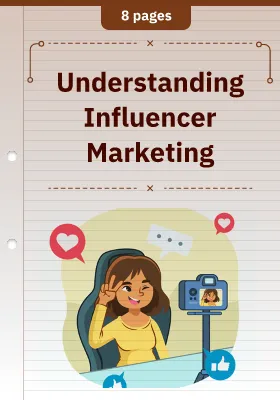
Understanding Influencer Marketing

Understanding Influencer Marketing

This worksheet aims to raise students’ awareness of the mechanisms, economic dimensions, and psychological strategies of modern digital marketing in everyday life.

Content and Methods: The material focuses on the economic significance of social media marketing based on statistical data, as well as the analysis of specific digital posts. Methodologically, the worksheet relies on a combination of practical case studies—in which an exemplary social media post is deconstructed both textually and statistically—and theoretical insights into behavioral economic effects. In addition, the material encourages multi-perspective discussion through reflective writing assignments and the comparison of contrasting stakeholder perspectives. Finally, the discussion of complex issues is used to synthesize what has been learned into the formation of independent judgments.

Competencies:

Analytical and Deconstructive Competence: The ability to systematically examine media content and linguistic and statistical devices for their manipulative or promotional effects

Reflective and Critical Thinking Competence: The ability to critically examine one’s own consumer behavior and evaluate economic phenomena from different perspectives

Media and Economic Competence: Understanding of digital market mechanisms, psychological influence strategies such as the authority bias or the bandwagon effect, and their impact on the economy

Target Audience and Level: 9th/10th grade

EconomicsPolitics