to teach logo
Sign up

Inhaltsfeld Medien: Medientheorie und Partizipation

TT
by to-teach Team
6 pagesLeistungskursGerman
Template

Loading preview…

Your worksheet

Determine the main topic of the informational text. This serves as the basis for the analysis tasks.

Need an idea?

Popular topics from other teachers

How our AI templates work

  • Content gets adapted

    Examples, texts and tasks match your focus.

  • Method & structure stay

    The didactically reviewed structure of the template won't change.

Description

Zielsetzung: Das übergeordnete Lernziel ist die theoriegeleitete und reflexive Auseinandersetzung mit dem digitalen Strukturwandel der Öffentlichkeit sowie die Stärkung von Medienkompetenz und Urteilsfähigkeit. Die Lernenden dekonstruieren Mechanismen digitaler Informationsverbreitung (Prosumer-Rolle, Algorithmen, Filterblasen, Desinformation), erarbeiten kriteriengeleitete Prüfstrategien für Geltungsansprüche und wägen Chancen und Risiken digitaler Partizipation für die demokratische Willensbildung multiperspektivisch ab.

Inhalte und Methoden: Das Arbeitsblatt führt über die historische Gegenüberstellung klassischer Push-Medien und moderner Plattformarchitekturen in den medialen Wandel und das Phänomen des „Prosumers“ ein. Anhand eines realitätsnahen Social-Media-Szenarios (virales Falschzitate-Video) entwickeln die Lernenden einen dreistufigen Kriterienkatalog zur Verifikation von Geltungsansprüchen (Wahrheit, Kontextualisierung, Absicht). Ein fundierter Fachtext dient anschließend als Grundlage für strukturierte Analyse- und Erörterungsaufgaben: Die Lernenden dekonstruieren die Funktionslogik von Algorithmen und Desinformation und evaluieren das Zusammenspiel individueller Nutzerverantwortung mit institutionellen Kontrollinstanzen. Den Abschluss bildet ein dialektischer Kurzessay zu einer Kontroverse über politische Willensbildung versus Gefährdung gesellschaftlicher Verantwortung im Netz.

Kompetenzen:

  • Medienanalyse- und Dekonstruktionskompetenz: kriteriengeleite Untersuchung und Differenzierung von medialen Darbietungsformen, algorithmischen Steuerungsmechanismen sowie strategischen Manipulationsstrategien (Fake News, Framing)
  • Prüf- und Methodenkompetenz (Fact-Checking): eigenständige Entwicklung und methodische Anwendung von Prüfverfahren zur Validierung von Informationsquellen und Geltungsansprüchen vor deren Weiterverbreitung
  • Urteils- und Argumentationskompetenz: strukturierte schriftliche Positionierung (Kurzessay) zu medientheoretischen und demokratiepolitischen Thesen unter stringenter Einbindung theoretischer Begrifflichkeiten
  • Demokratie- und Partizipationskompetenz: Reflexion über die eigene Verantwortung als Rezipient:in und Produzent:in („Prosumer“) im Rahmen der digitalen Öffentlichkeit und des demokratischen Diskurses

Zielgruppe und Niveau: Leistungskurs
Similar worksheets

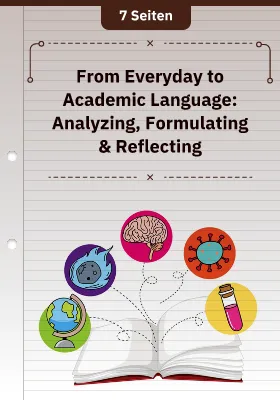
From Everyday to Academic Language: Analyzing, Formulating & Reflecting

From Everyday to Academic Language: Analyzing, Formulating & Reflecting

This worksheet aims to provide students with a solid understanding of the significance and function of academic language and to help them practice actively using it in subject-specific instruction. Students will recognize that academic language serves as an essential tool for presenting complex topics in an objective, impersonal, and precise manner, and that the ability to switch between everyday language and academic language is a key skill. Through guided practice in translating everyday observations into formal language, they learn to use subject-specific linguistic tools, to put their own thoughts into writing in a structured manner, and to reflectively evaluate their own learning process and linguistic expression.

Content and Methods:

The worksheet combines cognitive awareness, guided writing practice, independent text production, and self-evaluation. After an introductory informational text on the distinction between everyday language and academic language, as well as an introduction to subject-specific language tools (e.g., for cause-and-effect relationships, hypothesis formation, or evaluations), learners gradually translate given everyday statements into logically structured academic language. They then apply this translation technique to their own current course material and reflect on the advantages and challenges of academic language formulation. The module concludes with a structured self-assessment matrix designed to evaluate their own language competencies and identify remaining learning needs.

Competencies:

Learners can...

  • identify the difference between everyday language and academic language and explain the importance of precise technical language for subject-matter understanding.
  • identify and purposefully apply specific subject-specific language tools (e.g., phrasing guides for descriptions, justifications, and analyses).
  • systematically translate colloquial observations into precise, factual, and logically structured sentences using formal language.
  • structure their own conceptual ideas derived from current classroom activities and independently put them into writing using appropriate technical terms.
  • critically reflect on their own language translation process and evaluate their individual strengths and areas for development in the use of formal language.

Target Audience and Level:

Grade 8 and above

non-subject specific contentChemistryBiologyGeographyGerman