to teach logo
Sign up

Scary Stories

TT
by to-teach Team
3 pagesGrades 3-5non-subject specific content, English
Template

Loading preview…

Your worksheet

Enter the name of a typical figure from scary stories.

Need an idea?

Popular topics from other teachers

How our AI templates work

  • Content gets adapted

    Examples, texts and tasks match your focus.

  • Method & structure stay

    The didactically reviewed structure of the template won't change.

Description

Objective: This worksheet aims to engage students in reading and analyzing a short scary story, encouraging them to think critically about narrative elements and predict outcomes, while also fostering creative expression.


Content and methods: The worksheet features a multi-part scary story. Students are instructed to read the beginning of the story aloud, with the option of background music to enhance the atmosphere. After each section of the story, discussion prompts encourage students to analyze what has happened and predict what will happen next. The worksheet concludes with an activity where students draw their favorite scene from the story.


Competencies:

  • Reading comprehension
  • Oral reading fluency
  • Critical thinking and analysis of narrative elements (e.g., suspense, atmosphere)
  • Prediction skills
  • Collaborative discussion
  • Creative expression (drawing)


Target group: 3rd-5th grade
More from: Halloween

View all
Traditional Holidays in Transition (advanced)

Traditional Holidays in Transition (advanced)

This worksheet aims to explore the evolution and diverse cultural practices of a holiday's celebrations, while also critically examining the associated negative impacts.


Content and methods: The worksheet starts with a chat conversation between two teenagers, discussing their respective traditions in their countries regarding a specific holiday, and how these traditions have changed across generations. This prompts a class discussion on students' own celebration experiences and other related customs. A matching activity follows, where students connect various countries with unique holiday traditions. The worksheet then presents historical perspectives through short texts from three individuals describing their holiday celebrations, enabling students to identify key differences over centuries. An article introduces various problems regarding holiday celebrations, leading to a discussion on general criticisms of traditional holidays. Finally, the worksheet facilitates a partner discussion with pro and contra role cards regarding holiday celebrations, encouraging students to develop arguments and debate. It concludes with a class discussion on the relevance of traditional holidays today and individual writing tasks on evaluating environmental impact, discussing consumerism, and proposing balanced celebration adaptations.


Competencies:

  • Cultural awareness and understanding of diverse traditions
  • Historical analysis of evolving traditions
  • Critical thinking and problem identification regarding social and environmental issues associated with celebrations
  • Argumentation and debate skills
  • Written communication and proposal development for sustainable solutions


Target group: 9th-12th grade

Geographynon-subject specific contentPolitics
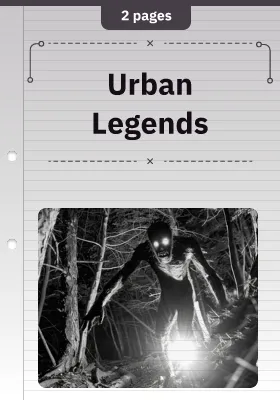
Urban Legends

Urban Legends

This worksheet aims to introduce students to the concept of urban legends, their characteristics, and how they spread, encouraging creative storytelling and critical analysis of narrative elements.


Content and methods: The worksheet begins by having students listen to a voice message (audio content) that refers to an urban legend and asks them how they would respond to it. It then defines urban legends as modern myths often passed off as true, involving supernatural events or eerie figures, and spreading through word of mouth or the internet, evolving over time. An example is provided to illustrate these characteristics. The worksheet lists common characteristics of urban legends, such as spreading through word of mouth, containing a moral lesson, including horror or humor, being presented as true, involving common fears, featuring anonymous sources, and changing over time. Students are then tasked with identifying these features in the story from the initial voice message. The main creative activity involves students working in groups to create their own urban legend, incorporating as many of the listed characteristics as possible, and then presenting it to the class in a convincing and scary manner.


Competencies:

  • Listening comprehension and initial critical response
  • Understanding and identifying characteristics of urban legends
  • Creative writing and storytelling
  • Collaborative teamwork
  • Oral presentation and persuasive communication skills


Target group: 6th-10th grade

non-subject specific contentEnglish