AI-powered lesson planning

Science Worksheets for Primary School – Working Scientifically

Reception - Year 6 – Discovering the natural world.

No credit card required · GDPR compliant

300,000+
Teachers
5,000+
Schools
1,000,000+
Materials created

Plants, animals, materials, forces – science that sparks curiosity from Reception to Year 6.

Create worksheets for all science topics. Working scientifically skills, knowledge, and understanding for the National Curriculum.

Popular templates

Start with a template and tailor it to your topic
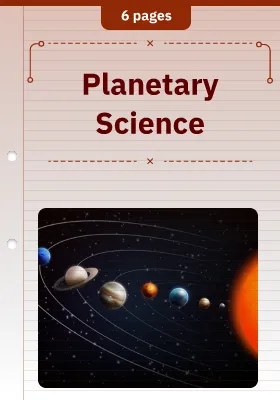
Planetary Science
Planetary Science

This worksheet aims to familiarize students with the planets in our solar system, focusing on their order, relative sizes, and key characteristics. Content and methods: The worksheet begins
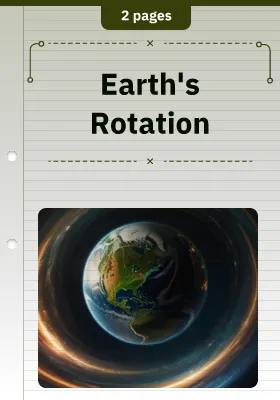
Earth's Rotation

Earth's Rotation

This worksheet aims to educate students on the Earth's rotation and its influence on day and night cycles and seasons, with a specific focus on how these phenomena manifest in the climate of a selected country. Content and methods: The worksheet starts by directing students to watch a YouTube video titled "Why Do We Have Different Seasons? | California Academy of Sciences" and then summarize the connection between Earth's rotation, seasons, and vegetation in their own words. A dedicated section on the effects of Earth's rotation on a particular country provides a detailed text about the country's climate, daylight hours, and temperature variations. Students then answer true/false questions based on this text to assess their comprehension. The worksheet concludes with a crossword puzzle using terms and concepts from the provided texts, reinforcing vocabulary and factual recall. Competencies: Reading comprehension Summarization and synthesis of information Understanding of scientific concepts (Earth's rotation, seasons, climate) Geographical knowledge Vocabulary acquisition Target group: 6th-8th grade
Biology Experimental Protocol

Biology Experimental Protocol

The students create an experiment log. Contents and Methods: The worksheet provides a structured biology experimental protocol. Students are required to document the process through technical drawings, data recording, and a written conclusion. Competencies: Planning and executing a scientific experiment following a specific procedure. Collecting and recording empirical data through observation. Visualizing experimental setups and results through scientific labeling and drawing. Drawing evidence-based conclusions to explain biological phenomena. Target Group and Level: Grade 7 and above
Chemie: Dokumentation der Gefährdungsbeurteilung
Chemie: Dokumentation der Gefährdungsbeurteilung

Das Arbeitsblatt hilft bei der Dokumentation einer Gefährdungsbeurteilung und soll ein Bewusstsein für den sicheren Umgang mit Gefahrstoffen schaffen. Inhalte und Methoden: Es enthält ein
Messbare Stoffeigenschaften

Messbare Stoffeigenschaften

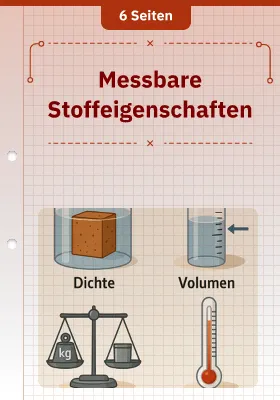
Das übergeordnete Lernziel des Arbeitsblattes ist es, Schüler:innen mit grundlegenden messbaren Stoffeigenschaften wie Temperatur, Masse und Volumen vertraut zu machen. Sie sollen die zugehörigen Messgeräte und Einheiten benennen lernen, die Bedeutung von Messungen in einfachen chemischen Kontexten verstehen und erkennen, wie Anfangsbedingungen, beispielsweise die Temperatur, chemische Experimente beeinflussen können. Inhalte und Methoden: Das Arbeitsblatt behandelt die Bedeutung von "messbar" in der Chemie, stellt verschiedene messbare Stoffeigenschaften (Temperatur, Masse, Volumen), deren Einheiten (°C, g, mL) und passende Messgeräte (Thermometer, Waage, Messbecher) vor. Es werden alltagsnahe Anwendungen besprochen sowie Konzepte wie Volumenänderung und Massenerhaltung angerissen. Methodisch werden Zuordnungsaufgaben zwischen Eigenschaft, Gerät und Einheit eingesetzt, Anwendungs- und Reflexionsfragen gestellt und ein Experiment durchgeführt, bei dem die Startbedingungen variiert werden. Kompetenzen: Fachwissen: Benennung von Eigenschaften, Einheiten und Geräten Erkenntnisgewinnung: Beobachtung, Messung und Verständnis ihrer Bedeutung Kommunikation: Korrekte Verwendung von Fachbegriffen Bewertung: Erfassung der Bedeutung von Messungen für Experimente Zielgruppe und Niveau: Klasse 7, Einstieg in das naturwissenschaftliche Arbeiten ohne Vorwissen. Möglichkeiten der Anwendung: Die Aufgabe eignet sich sowohl für das Stationenlernen (durch das Erstellen mehrerer Versionen des Arbeitsblattes) als auch für die Bearbeitung als klassisches Arbeitsblatt.

Browse all templates

Explore all worksheets and start with a template that fits your lesson.

Open library

Benefits

What makes to-teach different

All science topics

Living things, animals including humans, plants, materials, rocks, light, forces, Earth and space, electricity.

Working scientifically

Enquiry skills, fair testing, observation, recording – develop scientific thinking alongside knowledge.

Real-world contexts

Science that matters. Everyday phenomena, environmental issues, health and wellbeing.

FAQ

Yes. Resources follow the Programme of Study for English, Maths, and Science.

Ready for better lessons?

Join thousands of teachers who use AI to prep faster, differentiate more easily, and teach more creatively.

GDPR compliant · Ready in 30 sec · No credit card required

Interested in a school license? Book a consultation