Grundlagen Vulkane

TT
by to-teach Team
4 pages7./8.KlasseGeography, Science
Template

Loading preview…

Your worksheet

Enter the name of a country with (active) volcanoes. In an information text, learners explore the influence of volcanoes on the country.

Need an idea?

Popular topics from other teachers

How our AI templates work

  • Content gets adapted

    Examples, texts and tasks match your focus.

  • Method & structure stay

    The didactically reviewed structure of the template won't change.

Description

Zielsetzung: Dieses Arbeitsblatt vermittelt Schüler:innen grundlegendes Wissen über die Entstehung und Auswirkungen von Vulkanen. Es behandelt sowohl die geologischen Prozesse als auch die konkreten Folgen vulkanischer Aktivität für Umwelt und Gesellschaft an einem gewählten Land.

Inhalte und Methoden: Das Arbeitsblatt beginnt mit einem Einführungsvideo, das die Entstehung von Vulkanen und den Ablauf von Vulkanausbrüchen erklärt, einschließlich der Begriffe Magma, Lava und der Rolle von Plattengrenzen und Hotspots. Eine Lückentextaufgabe festigt dieses grundlegende Wissen. Anschließend vertieft ein Text die Auswirkungen von Vulkanen auf das gewählte Land. Multiple-Choice-Fragen überprüfen das Textverständnis. Ein Kreuzworträtsel am Ende des Arbeitsblattes dient der spielerischen Wiederholung der Schlüsselbegriffe.

Kompetenzen:

  • Sachkompetenz: Erwerb grundlegenden Wissens über Vulkane, deren Entstehung und Auswirkungen.
  • Analyse von Ursache und Wirkung: Verständnis der positiven und negativen Folgen vulkanischer Aktivität.
  • Problemlösung: Anwendung des erlernten Wissens zur Beantwortung von Fragen und zum Lösen des Kreuzworträtsels

Zielgruppe und Niveau: 7./8.Klasse
Similar worksheets

The impact of AI on the environment

The impact of AI on the environment

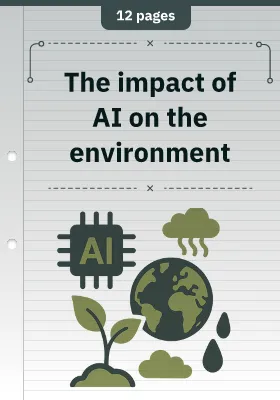
Objective: The worksheet aims to raise learners' awareness of the environmental impact of artificial intelligence (AI). It trains them to critically analyse the energy and resource consumption of data centres in order to develop strategies for the environmental sustainability of AI technology, particularly through the use of renewable energies.


Contents and methods: The worksheet begins with a warm-up on the learners' personal attitudes towards AI and climate change, followed by information about AI data centres in a selected country/city. Learners analyse advantages and environmental risks using text and cause-and-effect analyses. Methods such as group research, perspective changing and decision-making encourage reflection on sustainability and concrete measures for environmental responsibility.


Competencies:

  • Sustainability awareness: Understanding the ecological footprint of digital technologies (energy and resource consumption).
  • Critical analysis: Weighing technological advantages (climate research, smart farming) against environmental risks.
  • Problem solving: Developing concrete strategies to promote energy efficiency and the use of green energy sources for AI.
  • Understanding of roles: Making informed political decisions from an environmental policy perspective.


Target group and level: Years 8–10 (middle school)


ESD:

  • 12: Responsible consumption and production patterns: This addresses the challenge of raw material extraction (rare earths) and the need for recycling and sustainable procurement.
  •  13: Climate action: The text highlights the role of AI in reducing global emissions and in climate research.

non-subject specific contentEthicsGeographyPoliticsSustainable Development Goals (SDG)