Leben in der Großstadt

TT
by to-teach Team
5 pagesab Klasse 6Geography
Template

Loading preview…

Your worksheet

Enter the name of a big city.

Need an idea?

Popular topics from other teachers

How our AI templates work

  • Content gets adapted

    Examples, texts and tasks match your focus.

  • Method & structure stay

    The didactically reviewed structure of the template won't change.

Description

Zielsetzung: Das übergeordnete Lernziel des Arbeitsblattes ist es, Schüler:innen einen umfassenden Eindruck von einer Großstadt zu vermitteln, indem sowohl persönliche Eindrücke als auch sachliche Informationen über Geschichte, Kultur, Geografie, Verkehr und Besonderheiten der Stadt vermittelt werden.


Inhalte und Methoden: Das Arbeitsblatt behandelt eine Großstadt durch die Analyse von Social-Media-Posts einer fiktiven Person, die persönliche Einblicke in das Stadtleben geben. Ergänzt wird dies durch einen informativen Sachtext über die Stadt. Methodisch werden Aufgaben zum Leseverständnis, zur Informationsverarbeitung in Form einer Mindmap und eines Kreuzworträtsels eingesetzt, um das erworbene Wissen zu festigen und zu überprüfen.


Kompetenzen:

  • Leseverständnis und Informationsentnahme aus verschiedenen Textarten (Social-Media-Posts, Sachtext)
  • Zusammenfassen und Strukturieren von Informationen (Erstellung einer Mindmap)
  • Wissensüberprüfung und -anwendung (Kreuzworträtsel)
  • Kritisches Denken (Ableiten von Eindrücken über die Stadt)
  • Sprachkompetenz im Deutschen


Zielgruppe und Niveau: ab Klasse 6
Similar worksheets

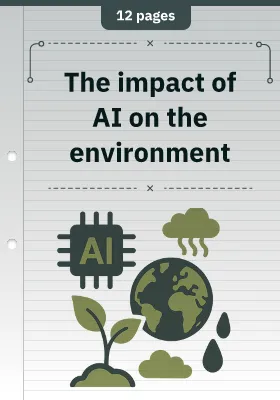
The impact of AI on the environment

The impact of AI on the environment

Objective: The worksheet aims to raise learners' awareness of the environmental impact of artificial intelligence (AI). It trains them to critically analyse the energy and resource consumption of data centres in order to develop strategies for the environmental sustainability of AI technology, particularly through the use of renewable energies.


Contents and methods: The worksheet begins with a warm-up on the learners' personal attitudes towards AI and climate change, followed by information about AI data centres in a selected country/city. Learners analyse advantages and environmental risks using text and cause-and-effect analyses. Methods such as group research, perspective changing and decision-making encourage reflection on sustainability and concrete measures for environmental responsibility.


Competencies:

  • Sustainability awareness: Understanding the ecological footprint of digital technologies (energy and resource consumption).
  • Critical analysis: Weighing technological advantages (climate research, smart farming) against environmental risks.
  • Problem solving: Developing concrete strategies to promote energy efficiency and the use of green energy sources for AI.
  • Understanding of roles: Making informed political decisions from an environmental policy perspective.


Target group and level: Years 8–10 (middle school)


ESD:

  • 12: Responsible consumption and production patterns: This addresses the challenge of raw material extraction (rare earths) and the need for recycling and sustainable procurement.
  •  13: Climate action: The text highlights the role of AI in reducing global emissions and in climate research.

non-subject specific contentEthicsGeographyPoliticsSustainable Development Goals (SDG)