Oceans

TT
by to-teach Team
7 pagesGrade 5 and aboveGeography
Template

Loading preview…

Your worksheet

Enter the name of an ocean.

Need an idea?

Popular topics from other teachers

How our AI templates work

  • Content gets adapted

    Examples, texts and tasks match your focus.

  • Method & structure stay

    The didactically reviewed structure of the template won't change.

Description

Objective: This worksheet aims to enhance students' knowledge of oceans and continents, including their geographical locations, characteristics, and significant features, through various interactive and informative tasks.


Content and methods: The worksheet begins with an audio activity, asking students to close their eyes and listen to sounds from the Indian Ocean, then note what they heard and where it was recorded. It then directs students to watch a YouTube video titled "OCEANS for Kids - Geography for Kids" to learn about the location of oceans and other oceans. A "Test your knowledge" section presents descriptions of oceans and continents, challenging students to guess their names. The worksheet includes a detailed profile of a selected ocean, covering its size, depth, climate, natural phenomena, marine life, and special features such as its numerous islands and role in human history. Students are tasked with filling out a profile for the ocean based on the provided text. The final activity is a partner work where students use a world map to describe and guess marked ship or airplane routes, naming continents and oceans, and then create their own routes.


Competencies:

  • Listening comprehension
  • Geographical knowledge (oceans, continents, major geographical features)
  • Reading comprehension and information extraction
  • Map reading and interpretation
  • Oral communication and descriptive skills
  • Partner collaboration


Target group: 5th-7th grade
Similar worksheets

The impact of AI on the environment

The impact of AI on the environment

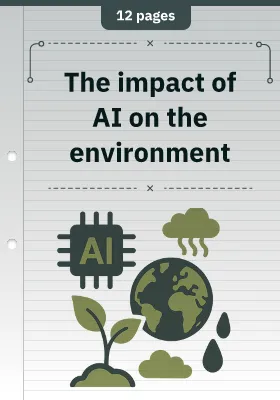
Objective: The worksheet aims to raise learners' awareness of the environmental impact of artificial intelligence (AI). It trains them to critically analyse the energy and resource consumption of data centres in order to develop strategies for the environmental sustainability of AI technology, particularly through the use of renewable energies.


Contents and methods: The worksheet begins with a warm-up on the learners' personal attitudes towards AI and climate change, followed by information about AI data centres in a selected country/city. Learners analyse advantages and environmental risks using text and cause-and-effect analyses. Methods such as group research, perspective changing and decision-making encourage reflection on sustainability and concrete measures for environmental responsibility.


Competencies:

  • Sustainability awareness: Understanding the ecological footprint of digital technologies (energy and resource consumption).
  • Critical analysis: Weighing technological advantages (climate research, smart farming) against environmental risks.
  • Problem solving: Developing concrete strategies to promote energy efficiency and the use of green energy sources for AI.
  • Understanding of roles: Making informed political decisions from an environmental policy perspective.


Target group and level: Years 8–10 (middle school)


ESD:

  • 12: Responsible consumption and production patterns: This addresses the challenge of raw material extraction (rare earths) and the need for recycling and sustainable procurement.
  •  13: Climate action: The text highlights the role of AI in reducing global emissions and in climate research.

non-subject specific contentEthicsGeographyPoliticsSustainable Development Goals (SDG)