AI-powered lesson planning

Citizenship Worksheets for Secondary School – KS3 & KS4

Year 7-11 (ages 11-16) – National Curriculum aligned.

No credit card required · GDPR compliant

300,000+
Teachers
5,000+
Schools
1,000,000+
Materials created

Citizenship resources for Secondary School (Year 7-11).

Create worksheets covering British values, democracy, rights and responsibilities. PSHE and Citizenship curriculum support.

Popular templates

Start with a template and tailor it to your topic
AI future scenarios – opportunities and risks
AI future scenarios – opportunities and risks

The worksheet aims to raise learners' awareness of the opportunities and risks associated with artificial intelligence (AI). They should learn to analyze different perspectives and make cri
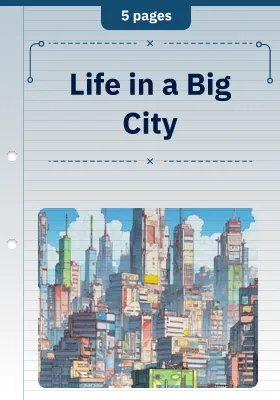
Life in a Big City

Life in a Big City

This worksheet aims to familiarize students with a city, including its history, geography, cultural landmarks, transportation, and diverse characteristics, and to enhance their reading comp
Smartphone Puzzle

Smartphone Puzzle

Students learn to analyze information from various digital sources and link it logically in order to draw conclusions. Content and Methodology: The worksheet offers an interactive puzzle task based around a found smartphone. The students analyze chat histories, pictures and an audio file to identify the owner of the smartphone. Skills: Critical analysis of texts and media Logical thinking and reasoning Understanding historical and/or scientific contexts Target Audience and Level: Suitable for teaching at lower secondary level.
Justice in a Democracy

Justice in a Democracy

This worksheet aims to introduce students to the concepts of justice, inequality, and democracy, enabling them to understand the importance of fair processes and active participation in a democratic system. Content and methods: The worksheet begins by prompting a class discussion on inequality and social justice, based on a suggested YouTube video. It then presents a chat conversation between two students discussing an unfair class representative election, which serves as a case study for further class discussion on fairness and democracy. Subsequently, students are directed to another YouTube video for a short introduction to democracy and democratic elections, followed by a true/false quiz to check their understanding of key democratic concepts and historical facts. The worksheet concludes with a role-play activity where students simulate an election, taking on different candidate roles, delivering speeches, and participating in a democratic vote. Competencies: Understanding of democratic principles and concepts Critical thinking and discussion skills (analyzing fairness and discrimination) Information retrieval and comprehension (from text and video) Active participation in a simulated democratic process (role-play, speech, voting) Identifying and articulating arguments for a candidate Target group: 8th-10th grade
Forms of government in different countries

Forms of government in different countries

Learn about different countries' forms of government.

Browse all templates

Explore all worksheets and start with a template that fits your lesson.

Open library

Benefits

What makes to-teach different

British values

Democracy, rule of law, individual liberty, mutual respect – explore core values.

Rights and responsibilities

Human rights, citizenship duties, community participation.

Current affairs

Discussion resources for contemporary issues. Balanced, age-appropriate.

FAQ

Yes. Covers all key concepts for GCSE Citizenship.

Ready for better lessons?

Join thousands of teachers who use AI to prep faster, differentiate more easily, and teach more creatively.

GDPR compliant · Ready in 30 sec · No credit card required

Interested in a school license? Book a consultation

Discover more